 Kathmandu
Cancer Center
Kathmandu
Cancer Center
Kathmandu
Cancer Center
Kathmandu
Cancer Center
You may not need to travel to India.
Cancer surgery removes the tumor from the body. At Kathmandu Cancer Center, our surgeons perform advanced cancer surgery for many cancers like breast, thyroid, stomach, colon, head-neck and gynecological cancers.
Our multidisciplinary team plans each patient's treatment to achieve the best outcomes.
Our surgeons trained at Tata Memorial, AIIMS and PGI — India's leading cancer hospitals.
Every patient is discussed by a team of surgeons, oncologists and radiologists before treatment.
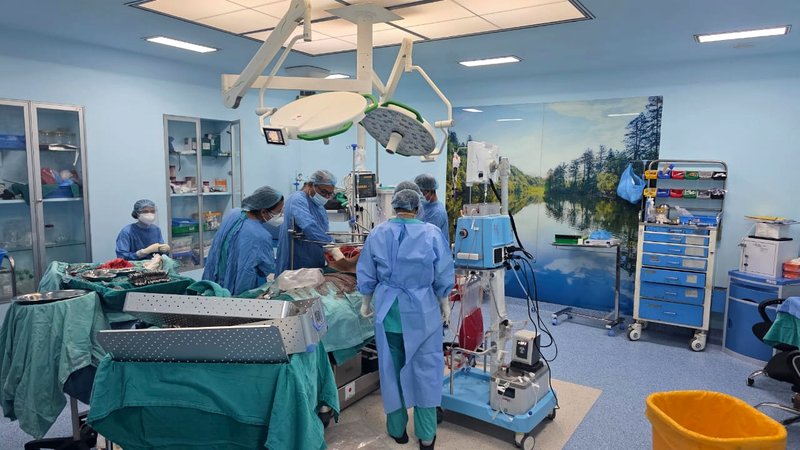
State-of-the-art surgical facilities with advanced equipment and monitoring technology.
We follow NCCN and ESMO guidelines — the same standards used at top cancer centers worldwide.
Surgery coordinated with chemotherapy, radiotherapy and supportive care — all at one center.
Recover at home in Nepal with your loved ones nearby, not in a hotel room in another city.
We offer the full range of cancer surgeries. Below are the main types of cancers we treat with surgery.
We follow the advanced protocols (chemotherapy before and after surgery) like FLOT, CROSS, FOLFOX, mFOLFIRINOX etc to improve outcomes—the same approach used at top international centers.
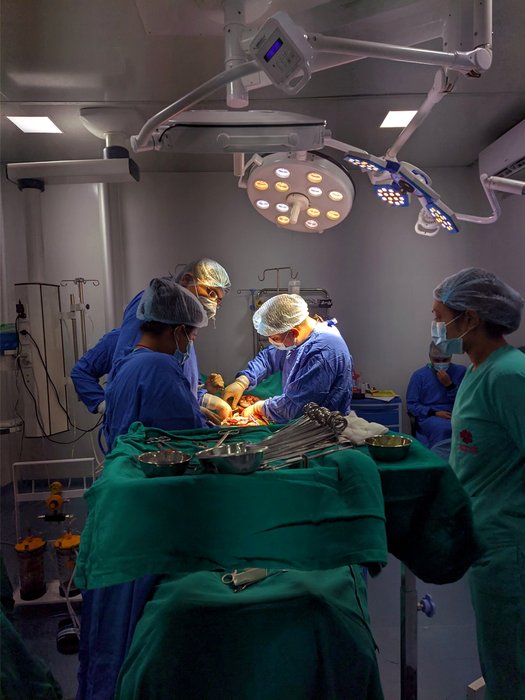
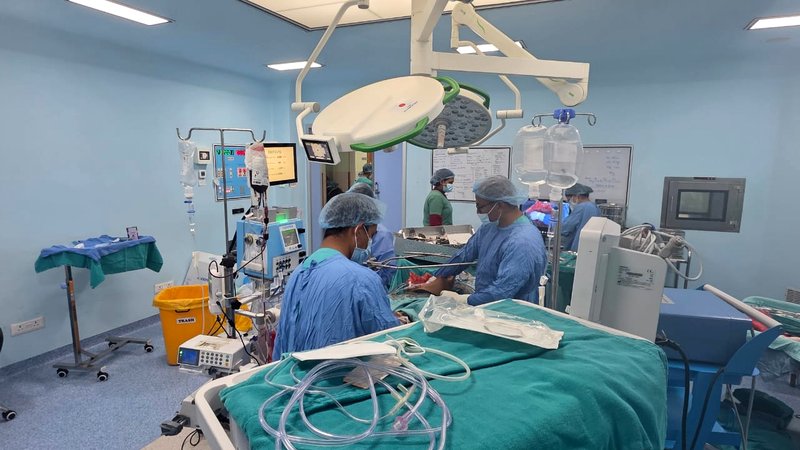
International-standard operating theatres with advanced equipment and experienced surgical teams.
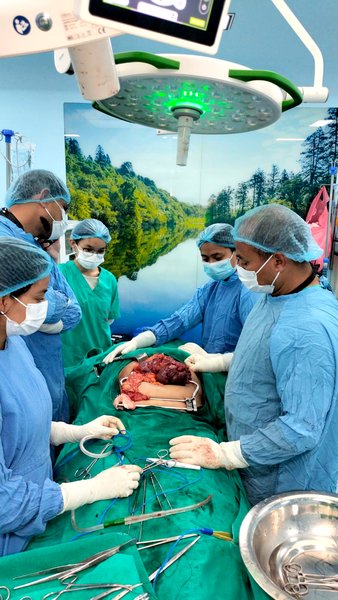
Every cancer patient is different. Your treatment plan is created by a tumor board — a team of cancer specialists who review your case together and recommend the best approach for you.
Cancer surgeon who plans and performs your operation
Chemotherapy specialist who plans drug treatments
Radiotherapy specialist who plans radiation treatment
Imaging specialist who reads scans and X-rays
Tissue specialist who analyzes biopsies
Coordinating your care and patient support
Multiple experts reviewing your case leads to better treatment decisions and higher survival rates
Coordinated planning reduces complications and helps you tolerate treatment better
This team approach is used at Tata Memorial, AIIMS, and PGI in India - the same hospitals where our surgeons trained
Your treatment is customized for YOUR cancer type, stage, and health status — not one-size-fits-all
From your first visit to recovery, here's what to expect at Kathmandu Cancer Center.
Imaging and biopsy determine the type and stage of your cancer.
Our team reviews your case and creates your treatment plan.
Some patients receive chemotherapy or radiotherapy before surgery to shrink the tumor.
Your tumor is removed safely in our modern operating theatre.
Hospital stay, pain management, wound care, and physiotherapy as needed.
Some patients receive chemotherapy or radiotherapy after surgery.
Fellowship-trained cancer surgeons with expertise in complex surgical procedures.
All surgeons follow international protocols and participate in multidisciplinary tumor board discussions for every patient.
We provide comprehensive support during and after surgery to help you recover fully.
Convenient location in Kathmandu for initial consultations and follow-up care.
Yes. Many cancers can be treated with surgery in Nepal. Kathmandu Cancer Center offers surgical treatment for breast, thyroid, stomach, colon, head-neck, gynecological and many other cancers. Our surgeons were trained at India's leading cancer hospitals and follow international guidelines.
No. Some cancers are treated with chemotherapy, radiotherapy, immunotherapy or targeted therapy alone. Our tumor board determines the best treatment for your specific cancer type and stage.
Modern anesthesia ensures you are completely asleep and comfortable during surgery. After surgery, we provide medications for pain management. Most patients experience mild to moderate discomfort rather than severe pain. We also provide physiotherapy to help with recovery.
Some cancers benefit from chemotherapy after surgery to reduce the risk of recurrence. Others may need chemotherapy before surgery to shrink the tumor. Your tumor board will recommend the best approach for your specific situation. All chemotherapy services are available at KCC.
This depends on the type of surgery. Minor procedures may be done in 1-2 days. Major surgeries typically require 7-14 days in hospital. Your surgeon will give you a specific estimate before your operation and will provide physiotherapy and support during your stay.
Cancer surgery at KCC is significantly more affordable than equivalent surgery in Indian cancer hospitals. When you add travel costs, accommodation and companion expenses, surgery in Nepal is more economical. Contact us for a cost estimate for your specific procedure.
We offer comprehensive post-surgery support including physiotherapy, speech therapy (for head-neck patients), nutritional guidance, psychological support, and long-term follow-up care. These services are essential for full recovery and are all available at KCC.
Cancer surgery is often part of a comprehensive treatment plan. We offer all these services at one center.
Breast cancer is the most common cancer in Nepali women. We offer all surgical options from breast-conserving surgery to reconstruction.
Breast cancer surgery removes the tumor and surrounding tissue. Options range from keeping the breast (conservation surgery) to removing the entire breast (mastectomy) with reconstruction by our plastic surgery team.
Women with breast cancer diagnosed after mammogram, ultrasound, or biopsy. Can include lumps, skin changes, or abnormalities found on screening.
Breast Conserving Surgery: Remove tumor, keep breast. Followed by radiotherapy.
Mastectomy: Remove entire breast if tumor is large.
Reconstruction: Restore breast using your own tissue or implants.
Our breast surgical oncology team can answer all your questions and create a personalized plan.
WhatsApp ConsultationRectal cancer treatment has advanced significantly. Many patients can now avoid permanent colostomy through sphincter-saving surgery combined with chemotherapy.
Rectal cancer surgery removes the tumor and surrounding colon tissue. Modern sphincter-saving techniques allow most patients to maintain normal bowel function without a permanent colostomy bag.
Patients with rectal cancer diagnosed after colonoscopy or biopsy. Symptoms may include blood in stool, changes in bowel habits, or abdominal pain.
Low Anterior Resection (LAR): Remove tumor, reconnect colon. Most common.
Pre-operative Chemotherapy: Often given first to shrink tumor and improve outcomes.
HIPEC: For advanced cancers with peritoneal spread (available at KCC).
Many patients qualify for sphincter-saving surgery. Discuss your options with our colorectal surgical team.
WhatsApp ConsultationStomach cancer is common in Nepal and Asia. Early detection and modern surgical techniques combined with chemotherapy significantly improve survival rates.
Stomach cancer surgery removes part or all of the stomach along with surrounding lymph nodes. Surgery is coordinated with chemotherapy to maximize survival and minimize recurrence risk.
Patients with stomach cancer diagnosed after endoscopy or biopsy. Symptoms may include difficulty swallowing, indigestion, abdominal pain, or weight loss.
Partial Gastrectomy: Remove part of stomach for early cancers.
Total Gastrectomy: Remove entire stomach for advanced cancers.
FLOT Chemotherapy: Chemotherapy before and after surgery improves survival significantly.
Complete treatment (surgery + FLOT chemotherapy) is available at KCC without traveling to India.
WhatsApp ConsultationExpert surgical treatment for ovarian cancer, cervical cancer, uterine cancer, and other gynecological malignancies. Our specialized gynecological oncologist performs complex procedures with advanced techniques.
Gynecological cancer surgery removes cancerous tissue from the ovaries, cervix, uterus, or surrounding areas. Procedures vary based on cancer type:
Ovarian Cancer: Cytoreductive surgery removes tumors from ovaries and peritoneum.
Cervical Cancer: Radical hysterectomy removes cervix and uterus.
Uterine Cancer: Hysterectomy removes uterus with staging procedures.
Ovarian Cancer Surgery: Comprehensive cytoreduction removes all visible cancer from ovaries and abdominal lining. HIPEC (heated chemotherapy) used for advanced cases.
Cervical Cancer Surgery: Radical hysterectomy removes cervix, uterus, and surrounding tissue. Pelvic lymph nodes assessed. Trachelectomy (cervix-preserving) available for early stage in younger women wanting children.
Uterine Cancer Surgery: Total hysterectomy with bilateral salpingo-oophorectomy (removal of fallopian tubes and ovaries). Lymph node staging determines need for further treatment.
Ovarian Cancer Patients: Tumor markers (CA-125) checked. Imaging assesses extent of disease. Nutritional counseling provided.
Cervical Cancer Patients: Staging scans determine surgical extent. Discussion about fertility preservation options if applicable.
Uterine Cancer Patients: Grade and stage of cancer determined. Assessment for lymph node involvement.
Our specialized gynecological oncologist provides expert care for ovarian cancer, cervical cancer, uterine cancer, and other gynecological malignancies with advanced surgical techniques including HIPEC.
WhatsApp ConsultationExpert surgical treatment for oral cancer, tongue cancer, laryngeal cancer, and other head and neck malignancies. Our specialized team performs complex procedures with dedicated plastic surgeons for functional and cosmetic reconstruction.
Head and neck cancer surgery removes tumors from specific locations:
Oral Cancer: Cancers of lips, gums, tongue, palate, floor of mouth.
Laryngeal Cancer: Voice box cancers requiring specialized voice-preserving techniques.
Salivary Gland Cancer: Tumors of parotid, submandibular, or minor salivary glands.
Tongue Cancer: Partial or total glossectomy with reconstruction.
Oral Cancer Surgery: Precise tumor removal with adequate margins. Neck dissection if lymph nodes involved. Reconstruction with bone/soft tissue grafts as needed.
Tongue Cancer Surgery: Partial or total glossectomy depending on tumor size. Immediate reconstruction with free tissue flaps to preserve function.
Laryngeal Cancer Surgery: Voice-preserving partial laryngectomy when possible. Total laryngectomy with voice rehabilitation if needed.
Salivary Gland Cancer: Parotidectomy or submandibular gland removal with careful nerve preservation.
Head & Neck Surgical Oncologist: Plans tumor removal strategy.
Plastic Surgeon: Performs reconstruction in same surgery.
Speech Pathologist: Provides voice/swallowing therapy from day 1.
Otolaryngologist: Manages post-operative breathing/swallowing issues.
Specialized team focused on cure AND quality of life — preserving speech, swallowing, and appearance for oral cancer, tongue cancer, laryngeal cancer, and salivary gland cancers.
WhatsApp ConsultationComprehensive thyroid cancer treatment with thyroidectomy, neck dissection, and radioiodine therapy — all coordinated at KCC.
View Thyroid Surgery Details →Early treatment improves outcomes. Our surgical oncology team is ready to help.
Kathmandu Cancer Center
Main Hospital: Tathali, Bhaktapur | City Clinic: New Baneswor, Kathmandu
Open 24/7 | OPD 9 AM - 6 PM