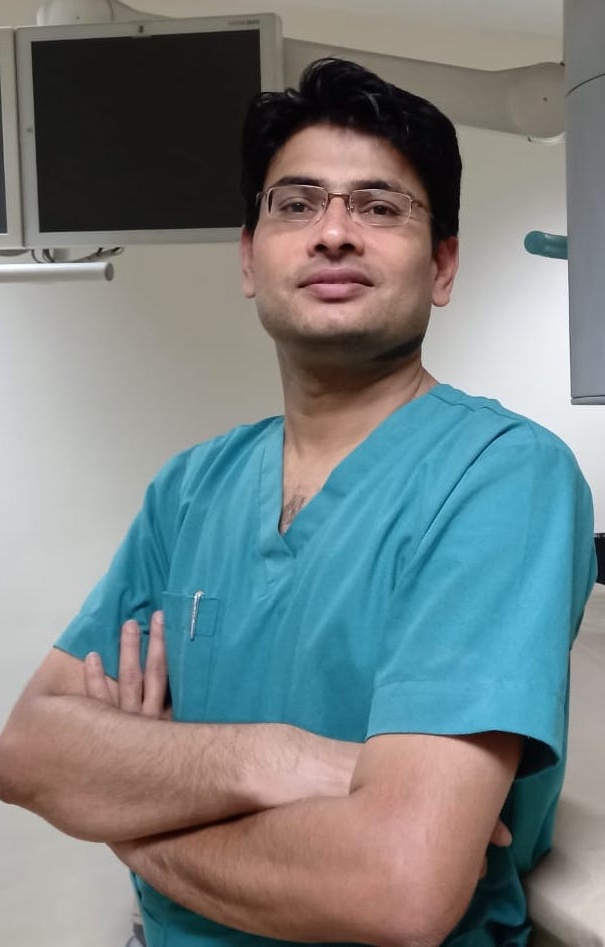
First Surgeon to Perform CRS + HIPEC in Nepal
Cytoreductive Surgery combined with Hyperthermic Intraperitoneal Chemotherapy — previously unavailable in Nepal. Dr. Lamichhane performed it here for the first time at KCC. Patients with peritoneal spread of cancer no longer need to travel to India for this procedure.
Training Built for Cancers That Don't Respect Boundaries
Dr. Deep Lamichhane trained in surgical oncology and GI-HPB surgery at Tata Medical Centre, Kolkata — India's premier dedicated cancer hospital and one of the most respected surgical oncology training programmes in South Asia. He completed two separate fellowships there spanning three long years: one in Surgical Oncology and another in GI-HPB Surgery.
"A combination that is rare and deliberate. Most surgeons train in one or the other. He trained in both — because the cancers he treats do not respect clean boundaries."
Since returning to Nepal, Dr. Lamichhane is focussed not only on operating on the patient but on making the overall treatment plan for them — the factor that separates him from other surgeons. Surgery is one step in a carefully coordinated pathway, planned through the Multidisciplinary Tumour Board alongside medical oncologists and radiation oncologists at KCC.
He was instrumental in starting the surgical services at Kathmandu Cancer Center and has built the most advanced cancer surgery programme in the country. The programme now routinely performs breast conserving surgery, wire-guided tumour removal, sphincter-preserving surgery for rectal cancers, CRS + HIPEC, salvage surgery for recurrent cancers, pelvic exenterations, complex HPB surgery, and lymphadenectomy — with outcomes comparable to leading South Asian cancer centres.
Every Cancer Surgery Available in Nepal — At KCC
Dr. Lamichhane performs the complete spectrum of oncological surgery. Patients with any of these conditions do not need to travel to India or abroad for their surgical care.
This list is not exhaustive. Discuss your specific diagnosis with Dr. Lamichhane at your consultation.
Protocol-Based Cancer Surgery — The International Standard, Here in Nepal
What distinguishes his approach is a commitment to protocol-based cancer treatment. Surgery is not always the first step. These protocols — standard at Tata Medical Centre, MD Anderson, and leading European cancer centres — are followed at KCC, coordinated through the Multidisciplinary Tumour Board.
Rectal Cancer
TNT — Total Neoadjuvant Therapy
Chemo + radiation before surgery, improving tumour response and sphincter preservation rates.
Gastric Cancer
Perioperative FLOT Chemotherapy
Chemotherapy before and after surgery — the global gold standard for improved survival.
Muscle-Invasive Bladder Cancer
Neoadjuvant Chemotherapy
Systemic treatment prior to radical surgery reduces micro-metastatic disease.
Peritoneal Metastases
CRS + HIPEC
Heated intraperitoneal chemotherapy after cytoreduction — now available in Nepal.
Dr. Deep Lamichhane — In His Own Words
Dr. Lamichhane discusses cancer surgery, protocols, and patient care at Kathmandu Cancer Center
Do I Need to Go to India for Cancer Surgery?
In most cases, no. KCC offers the same surgical protocols, the same range of procedures, and a surgeon trained at the very institution Nepali patients are referred to in India — Tata Medical Centre, Kolkata.
Going to India
- Language and cultural barriers
- Away from family during treatment
- Follow-up requires repeat travel
- Fragmented post-op care
- High travel and accommodation cost
- Don’t decide by location—compare credentials, and you may find top expertise right here in Nepal.
Surgery at KCC Nepal
- Same Tata-trained surgeon as India
- Full range: GI, HPB, breast, HIPEC, laparoscopic
- Family nearby during recovery
- Seamless follow-up with same team
- Significantly lower total cost
- Continuous MDT coordination
क्यान्सर शल्यचिकित्सा — नेपालमै सम्भव छ
डा. दीप लामिछाने नेपालका सर्वाधिक अनुभवी सर्जिकल अन्कोलोजिस्ट (क्यान्सर शल्यचिकित्सक) हुन्। उहाँले भारतको सर्वोत्कृष्ट क्यान्सर अस्पताल — Tata Medical Centre, Kolkata — बाट दुईवटा Fellowship पूरा गर्नुभयो: एउटा Surgical Oncology र अर्को GI-HPB Surgery मा। यो तीन वर्षको प्रशिक्षण दक्षिण एसियाकै सबभन्दा कठिन तथा प्रतिष्ठित तालिमहरूमध्ये एक हो।
क्यान्सरको शल्यक्रियाका लागि भारत जानुपर्ने आवश्यकता छैन। ठूलो आन्द्राको क्यान्सर (colon cancer), मलद्वारको क्यान्सर (rectal cancer), स्तन क्यान्सर (breast cancer), पेटको क्यान्सर (stomach cancer), कलेजोको क्यान्सर (liver cancer), प्यान्क्रियाजको क्यान्सर (pancreatic cancer) — यी सबैको शल्यक्रिया अहिले काठमाडौँ क्यान्सर सेन्टर (KCC) मा नै गरिन्छ।
उहाँले नेपालमा पहिलोपटक CRS + HIPEC (पेटभित्र फैलिएको क्यान्सरको विशेष शल्यक्रिया) सम्पन्न गर्नुभयो — यो अपरेसन पहिले नेपालमा उपलब्ध थिएन। स्तन क्यान्सरमा Breast Conserving Surgery (स्तन जोगाउने शल्यक्रिया) र मलद्वार क्यान्सरमा Sphincter Preserving Surgery (थैलो नभई अपरेसन हुने विधि) पनि नियमित गरिन्छ।
केमोपोर्ट (chemoport) राख्ने काम पनि KCC मा नै हुन्छ, जसले बिरामीलाई बारम्बार सुई लगाउनु पर्ने झन्झटबाट मुक्ति दिन्छ। उहाँको अभ्यासमा सबै उपचारको योजना Multidisciplinary Tumour Board बाट गरिन्छ — जसमा शल्यचिकित्सक, अन्कोलोजिस्ट र रेडिएसन विशेषज्ञ मिलेर काम गर्छन्।
डा. लामिछाने KCC, तथाली (भक्तपुर) र KCC City Clinic, न्यू बानेश्वर, काठमाडौँ दुवै ठाउँमा बिरामी हेर्नुहुन्छ। अपोइन्टमेन्टका लागि: ०१-५३१२१२३ वा ९७६३-४९०९५०।
Frequently Asked Questions
Refer a Patient — GPs and Surgeons
Urgent surgical oncology referrals are accommodated within 24–48 hours. All new cases are reviewed at the weekly Multidisciplinary Tumour Board. A structured management plan is sent back to the referring doctor.