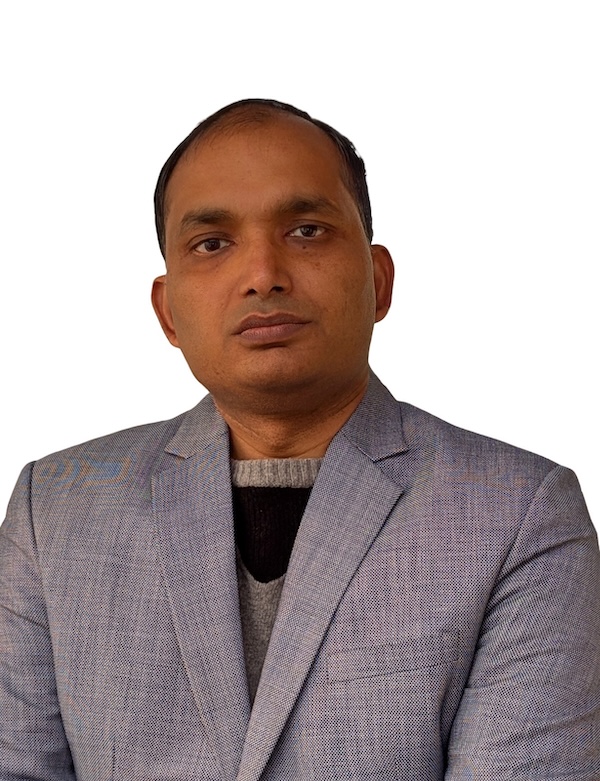
About Dr. Deepak Yadav
Dr. Deepak Yadav completed his MS ENT at the Institute of Medicine, TUTH, before earning a Fellowship in Head and Neck Cancer Surgery at Tata Memorial Hospital, Mumbai — India's foremost dedicated cancer institution, to which Nepal's most complex mouth, throat, and thyroid cancer cases are routinely referred. This fellowship is distinct from general ENT or endocrine surgery training: it is an immersion in high-volume oncological surgery at a centre that performs more head and neck cancer operations per year than most countries.
Over 15+ years of practice, Dr. Yadav has performed 1300+ thyroid surgeries, 200+ free flap microvascular reconstructions, and over 1500 cancer operations in total. He has introduced several procedures previously unavailable in Nepal, including skull base surgery, infratemporal fossa clearance, LASER cordectomy for voice preservation, and interstitial brachytherapy for lip and tongue cancers — the last of which requires the rare combination of surgical implantation skill and collaboration with a resident radiation oncology team, possible only at a dedicated cancer centre such as KCC.
Dr. Yadav is former Co-editor of the Nepalese Journal of ENT Head & Neck Surgery and is regularly invited as surgical faculty at national and international training programmes. The most meaningful measure of peer recognition in surgery is referral by colleagues: the majority of Dr. Yadav's complex cases arrive referred by fellow otorhinolaryngologists and, in some instances, by his own surgical mentors.
Anatomical Precision. Functional Preservation. Oncological Completeness.
Dr. Yadav's operating philosophy holds that oncological thoroughness and functional preservation are not competing goals — they are both achievable when surgical anatomy is respected at every step. Recurrent laryngeal nerve monitoring is routine in his thyroid practice, not selective. Parathyroid autotransplantation is planned, not reactive. Free flap reconstruction is not an afterthought but a simultaneous oncological and reconstructive strategy, restoring swallowing, speech, and facial contour in the same operation as tumour resection.
"The thyroid sits beside the nerves that control the voice and beside the parathyroid glands that regulate calcium. Every cut must account for them. A surgeon who has done 1300+ thyroid operations has learned this not in theory but in the operating theatre."
Areas of Expertise
Cancer Types Treated
Surgical Procedures Performed at KCC
Complete thyroid removal with central (level VI) or modified radical (levels II–V) neck dissection based on disease extent.
Intraoperative nerve monitoring is used routinely to protect voice. Parathyroid glands are identified and preserved or autotransplanted. 1300+ procedures performed.
Radial forearm, anterolateral thigh (ALT), or fibula free flap transfer to reconstruct defects after oral, pharyngeal, or mandibular resection.
200+ successful free flaps. Restores swallowing, intelligible speech, and facial contour in one operative sitting.
Transoral CO₂ laser microsurgery for early glottic (vocal cord) cancer.
Oncologically complete resection without neck incision, tracheostomy, or laryngectomy. Voice preserved in most cases.
Anterior, middle, and lateral skull base tumour resection via craniofacial or endoscopic approaches. Multidisciplinary planning with neurosurgery when required.
Available at KCC — previously unavailable in Nepal outside the largest tertiary hospitals.
Resection of advanced or recurrent tumours involving the infratemporal fossa, parapharyngeal space, or temporal bone.
Salvage surgery for locally advanced and recurrent cancers not amenable to standard resection.
Surgical implantation of interstitial catheters for high-dose-rate brachytherapy in lip and tongue cancers. Planned jointly with KCC's radiation oncology team.
Nepal's only programme offering this technique. Delivers tumoricidal radiation dose directly to target while sparing surrounding structures — an organ-preservation strategy unavailable elsewhere in the country.
Systematic removal of cervical nodal levels I–V for metastatic neck disease.
Spinal accessory nerve, internal jugular vein, and sternocleidomastoid preserved where oncologically safe, reducing functional morbidity.
Excision of parathyroid adenoma or hyperplasia causing primary hyperparathyroidism.
Intraoperative PTH assay confirms biochemical cure before wound closure. Minimally invasive targeted approach when localisation imaging allows.
Medical Qualifications
Awards & Recognition
- Former Co-editor, Nepalese Journal of ENT Head & Neck Surgery
- Faculty, national and international ENT surgical training programmes
Video
Dr. Deepak Yadav — Recognising Head and Neck Cancer