
 Book Appointment
- Home
- Treatments
- Immunotherapy
Immunotherapy in Nepal
At Kathmandu Cancer Center, at the standard dose or with flexible dosing.
For patients who could not otherwise receive it, flexible dosing lowers the drug cost by about 80 to 90%, backed by published research. Send us your reports and we will tell you in writing what is possible for your cancer.
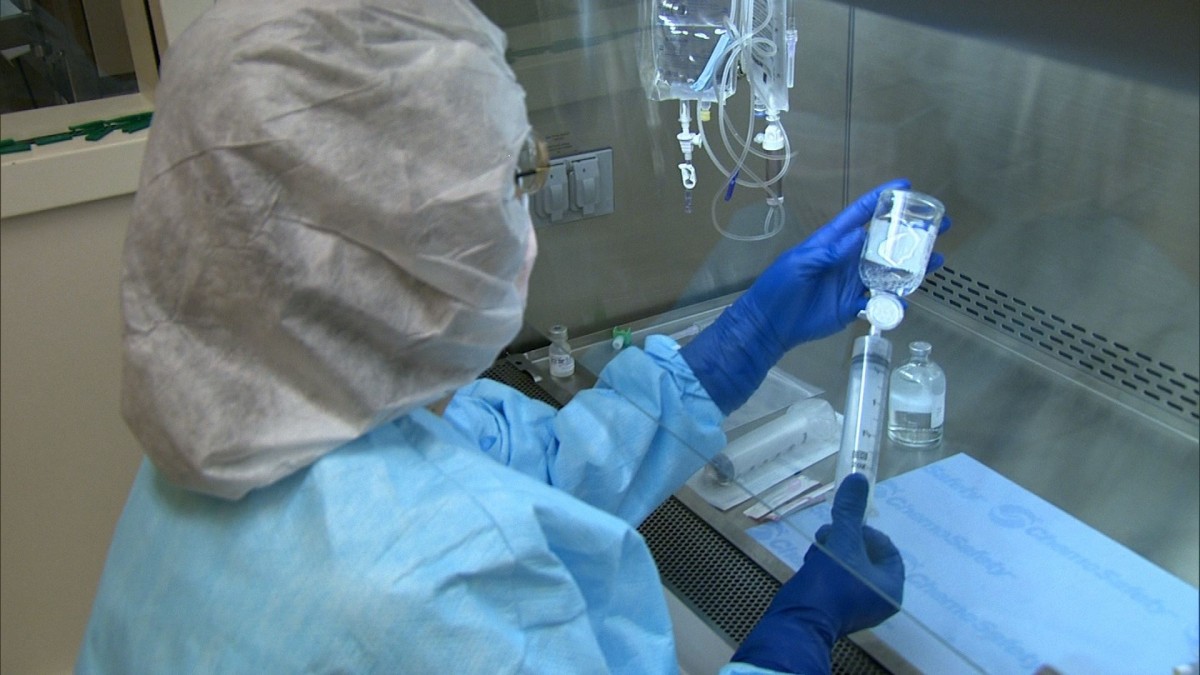
- Since 2022Immunotherapy available in Kathmandu
- 31 patientsOur own results, published in 2026
- 80 to 90%Lower drug cost with flexible dosing
- Tumour boardReviews every complex case
Is immunotherapy available in Nepal?
Yes. Immunotherapy with nivolumab and pembrolizumab is available at Kathmandu Cancer Center. It is given as a drip into a vein. Patients can receive the standard dose, or flexible dosing if cost would otherwise stop them from having treatment. Your oncologist chooses with you after looking at your cancer type, biomarker tests and general health.
- Drugs
- Nivolumab, pembrolizumab
- Where
- Tathali, Bhaktapur, and City Clinic, New Baneshwor
- Dose options
- Standard dose or flexible dosing
- First step
- WhatsApp your reports to 9818-226237
- Last reviewed
- October 2026
Which cancers can immunotherapy help?
Immunotherapy helps some cancers and not others, and often only in certain settings. Find your cancer to see who it is for, which tests come first, and what KCC offers.
-
Lung cancer
Used in many non-small cell lung cancers, on its own or with chemotherapy, and after chemoradiation in some stage 3 cases. Also added to chemotherapy in small cell lung cancer.
Treatment for lung cancer at KCC -
Breast cancer (triple-negative)
Helps some patients with triple-negative breast cancer, given with chemotherapy before and after surgery, or when the cancer has spread. It is not a standard treatment for most other types of breast cancer.
Treatment for breast cancer at KCC -
Head and neck cancer
Mouth, throat and larynx. Used mainly when the cancer has come back or spread, and in selected earlier cases. Much of the flexible dosing research is in this cancer.
Treatment for head and neck cancer at KCC -
Cervical cancer
Used with chemotherapy when the cancer has come back or spread, and in some high-risk cases together with chemoradiation.
Treatment for cervical cancer at KCC -
Oesophageal cancer (food pipe)
Used with chemotherapy as first treatment for advanced squamous cell cancer, and in some patients after chemoradiation and surgery.
Ask about oesophageal cancer on WhatsApp -
Stomach cancer
Added to chemotherapy for advanced stomach and gastro-oesophageal junction cancer.
Treatment for stomach cancer at KCC -
Liver cancer
Used for advanced liver cancer, usually combined with bevacizumab or another immunotherapy drug. It depends on how well the liver is working.
Treatment for liver cancer at KCC -
Bowel cancer (colon and rectum)
Works very well in the small group whose tumours are MSI-high or dMMR. It does not help most other bowel cancers, so testing comes first.
Treatment for colon or rectal cancer at KCC -
Gallbladder and bile duct cancer
Used with chemotherapy for advanced disease.
Ask about gallbladder or bile duct cancer on WhatsApp -
Other cancers
Hodgkin lymphoma, melanoma and other skin cancers, bladder cancer, cancer of the womb lining, and nasopharyngeal cancer. Send your reports and a doctor will tell you whether immunotherapy is an option.
Ask about my type of cancer on WhatsApp
The tests that come first for each cancer are listed in the next section.
Tests that decide whether immunotherapy can help
Immunotherapy does not work for every cancer, so the tests come before the treatment. They are done on tissue from your biopsy and help your doctors judge whether immunotherapy is likely to work for you.
- PD-L1
- Shows how much of the "hiding" protein the cancer makes. A higher level makes a good response more likely in several cancers, including some lung and head and neck cancers.
- MSI / dMMR
- Checks whether the cancer cells are unable to repair their own genetic errors. Tumours with this change often respond very well, whichever organ they started in. It matters most in bowel, stomach and womb cancers.
- TMB
- Counts how many genetic changes the cancer has. More changes give the immune system more to recognise.
- EGFR and ALK
- Checked first in lung cancer. If one of these changes is present, tablets that target it usually come before immunotherapy.
- HER2
- Checked in stomach and breast cancer. It decides whether a targeted drug is added.
Which tests come first
| Cancer | Tests that usually come first |
|---|---|
| Lung | PD-L1, EGFR, ALK |
| Oesophagus, stomach and gastro-oesophageal junction | PD-L1 (CPS), HER2, MSI / dMMR |
| Bowel (colon and rectum) | MSI / dMMR |
| Liver, gallbladder and bile duct | Diagnosis confirmed, and how well the liver is working |
| Head and neck | PD-L1 (CPS) |
| Cervix | PD-L1 (CPS) |
| Breast (triple-negative) | ER, PR and HER2 to confirm the type, and PD-L1 (CPS) |
| Lymphoma and skin cancer | Diagnosis confirmed on biopsy |
Your doctors may add other tests for your case.
Need a biopsy first? Biopsy and pathology are done at KCC. See biopsy at KCC.
Biopsy done elsewhere? Bring the paraffin block or unstained slides. We can usually run these tests on the same sample, so a new biopsy is usually not needed. Or send your biopsy report on WhatsApp and we will tell you which tests are still needed.
Two ways to receive immunotherapy at KCC
Many families come to us having been told that immunotherapy is out of their reach. That is why we offer two options.
Standard dose
The dose set out in international guidelines. It is the right choice for patients who can access it and whose doctors recommend it.
Flexible dosing
A smaller amount of nivolumab per treatment, based on published studies that include a randomised trial of more than 500 patients. The drug cost is about 80 to 90% lower. We offer it so that cost does not decide who gets immunotherapy.
How we decide. Your oncologist and our tumour board go through your cancer type, how far it has spread, your general health and what your family can manage. They explain both options and you decide together.
Why smaller doses were tested. Laboratory studies show that nivolumab can block its target in the body at much lower amounts than the standard dose. That is why researchers asked whether a smaller dose could work as well.
What is known and what is not. No study has compared flexible dosing directly with the full dose, so we cannot tell you the two give identical results. What studies show is that flexible dosing works better than chemotherapy for the cancers tested. Your doctor will go through this with you before treatment starts.
What our own patients' results show
Our doctors reviewed the records of 31 patients with advanced cancer who received flexible dosing of nivolumab at KCC. The results were published in the journal Cancer Reports in October 2026. To our knowledge, it is the first immunotherapy study from Nepal published in a PubMed-indexed journal.
These patients had cancers of the digestive tract, lung, head and neck, the female reproductive organs, skin, and Hodgkin lymphoma.
What this study cannot tell you
It is a small group from one hospital, looked at after treatment, with no comparison group. It does not promise the same result for your cancer. It does show that flexible dosing works in real patients in Nepal, not only in trials abroad.
Source: Pandit S, Sapkota S, Adhikari A, et al. Cancer Reports 2026;9(10):e70713. DOI 10.1002/cnr2.70713
The research behind flexible dosing
The DELII trial, run at Tata Memorial Hospital in Mumbai and published in the Journal of Clinical Oncology in 2026, gave more than 500 patients with advanced cancers about one twelfth of the standard nivolumab dose and compared them with patients on chemotherapy. Patients on nivolumab lived longer (median survival 5.88 months against 4.7 months, and 27.3% alive after one year against 16.9%) and had fewer serious side effects.
The gain is modest, and it is not a cure. The trial did not compare against full-dose nivolumab. KCC began offering flexible dosing in 2022, before this trial was published.
DELII paperPubMedOur blog post: Immunotherapy in Nepal, Options for Every Family
What does immunotherapy cost in Nepal?
Until recently, only a small minority of patients in Nepal could afford immunotherapy. Flexible dosing is how we are changing that.
The cost depends on the drug, the dose and how many treatments you need, and drug prices change, so we do not print a figure on this page. In general, flexible dosing lowers the drug cost by about 80 to 90% compared with the standard dose.
Send your reports on WhatsApp and we will send you a written estimate for your case, usually within a day. You decide after that, not before. The drug estimate does not include consultation, infusion or lab charges.
How to get your written opinion
- Send your reports on WhatsApp: diagnosis, biopsy report, scans and any biomarker results you already have.
- A KCC doctor reads them, and our tumour board reviews complex cases.
- You receive a written opinion and an estimate for your case, usually within a day.
Drugs available at KCC
| Drug | Used for |
|---|---|
| Nivolumab also sold as Opdivo | Head and neck cancer, non-small cell lung cancer, oesophageal cancer, bladder cancer, stomach and gastro-oesophageal junction cancer, MSI-high tumours of any organ |
| Pembrolizumab also sold as Keytruda | Lung cancer with PD-L1 50% or higher (first line), head and neck cancer, cervical cancer, triple-negative breast cancer, biliary tract cancer, MSI-high or dMMR tumours of any organ |
Durvalumab, atezolizumab and ipilimumab: we confirm availability for your case before you travel. Trastuzumab, bevacizumab and rituximab are targeted therapies and work differently from immunotherapy. See our targeted therapy page.
How immunotherapy works and what treatment is like
How it works
Your immune system can recognise cancer cells. Some cancers survive by making a protein called PD-L1, which switches off the T-cells that would attack them. Nivolumab and pembrolizumab block that signal, so your T-cells can see the cancer again. The drug does not kill cancer cells itself. It gets your own defences working.
The infusion
The drug goes into a vein as a drip. Each infusion takes 30 to 60 minutes. Between treatments most patients carry on with daily life and work. We check your blood before each treatment. Your doctor decides how many treatments you need and for how long, and writes it in your treatment plan.
Side effects
Immunotherapy usually does not cause the hair loss and severe nausea that chemotherapy can. It has its own side effects, because it switches the immune system on. Skin rash or itching, joint pain, loose motions and tiredness are the common ones. Less often, the immune system inflames the lungs, liver, kidneys or hormone glands. These can be serious but are treatable when found early, which is why we ask you to call early.
Call us the same day if you have
- Fever
- Loose motions that do not settle
- A new cough or breathlessness
- A severe rash or blisters
- Yellow eyes or skin
- Unusual weakness
Phone 01-5091629. Tell any other doctor or hospital you visit that you are on immunotherapy.
Dr. Simit Sapkota explains immunotherapy
Where you can be treated
Kathmandu Cancer Center, Tathali, Bhaktapur
Main hospital. Sunday to Friday, 9 am to 5 pm.
KCC City Clinic, New Baneshwor, Kathmandu
Immunotherapy infusions in central Kathmandu, so you do not have to go to Bhaktapur for every treatment.
Started treatment elsewhere, or deciding where to go?
- Already on immunotherapy in India or another country. WhatsApp your treatment summary and recent reports. We can usually confirm drug availability within a few days and continue your plan without starting over. Transferring treatment from India
- Still deciding where to be treated. The same drugs and the same international guidelines (NCCN, ESMO) are used here. You can send your reports for a second opinion before you travel anywhere. Second opinion
- Why some families prefer treatment at home. You stay near your family, and nobody has to leave work and home for months. Why treatment in Nepal
Other immune-based treatment
CAR-T cell therapy is a different kind of immunotherapy for some blood cancers. A patient's own T-cells are taken out, changed in a laboratory and given back. CAR-T therapy at KCC
Frequently asked questions
Is immunotherapy available in Nepal?
Do I need to go to India for immunotherapy?
What is flexible dosing?
Is flexible dosing as effective as the standard dose?
Can I have the standard dose at KCC?
How much does immunotherapy cost in Nepal?
Will immunotherapy work for my cancer?
What is the difference between immunotherapy and chemotherapy?
What side effects should I watch for?
Can I continue immunotherapy that I started in India or another country?
Send your reports. We will reply in writing.
WhatsApp the diagnosis, biopsy report and any scans or biomarker results you have to 9818-226237. A doctor reads them, and you usually hear back within a day. You decide after that, not before.
Related pages
- Patient guide
- Immunotherapy FAQ
- Second opinion
- Transferring treatment from India
- Treatment in Nepal vs abroad
- Cancer treatment cost in Nepal
- Chemotherapy
- Targeted therapy
- CAR-T therapy
- Radiotherapy
- Our doctors
- KCC research
Reviewed by Dr. Subhas Pandit and Dr. Simit Sapkota. Last reviewed October 2026. This page is general information and does not replace advice from your own doctor.
- Pandit S, Sapkota S, Adhikari A, et al. Low-Dose Nivolumab in Various Cancers: A Real-World Exploratory Analysis in Resource-Constrained Settings. Cancer Reports 2026;9(10):e70713. DOI 10.1002/cnr2.70713
- Noronha V, et al. Efficacy and Safety of Ultra-Low-Dose Immunotherapy in Relapsed Refractory Solid Tumors: Phase III Superiority Randomized Trial (DELII). J Clin Oncol 2026. DOI 10.1200/JCO-25-01546
- Patil V, et al. Low-Dose Immunotherapy in Head and Neck Cancer: A Randomized Study. J Clin Oncol 2023. DOI 10.1200/JCO.22.01015