
 Book Appointment

What is Chemotherapy?
Chemotherapy is a treatment that uses strong medicines to kill cancer cells. It is especially helpful when cancer has spread to different parts of the body, while surgery or radiation usually treat one area. Depending on your cancer type and stage, chemotherapy can cure cancer, control its growth, or relieve symptoms.
How Does Chemotherapy Work?
Chemotherapy targets fast-growing cancer cells and stops them from multiplying. It can be given as IV infusions (most common), oral pills, topical creams, or injections into a specific area. Because some healthy cells also grow quickly — like in your mouth, stomach, or hair — side effects can happen. Most side effects improve after treatment ends.
Is Chemotherapy Right for You?
Your doctor looks at your cancer type and stage, overall health, age, and other conditions to decide if chemotherapy is suitable. Goals may be to remove cancer, slow its growth, prevent spread, reduce pain, or shrink a tumor before surgery. If chemotherapy is not the best choice for you, other treatments such as radiation therapy, targeted therapy, immunotherapy, or CAR-T cell therapy may be recommended.
Chemotherapy Dose Planning Tool
KCC uses standardized protocols and body-based calculations to determine safe and effective chemotherapy doses.
This tool helps estimate chemotherapy dosage based on body parameters and clinical protocols. It is intended for medical professionals and informed users as a reference tool.
Use Dose CalculatorThis tool does not replace medical advice. Always consult an oncologist before making treatment decisions.
What to Expect After Chemotherapy
We schedule regular check-ups, blood tests, and scans to monitor your recovery and watch for any recurrence or late effects. Lifestyle changes — not smoking, limiting alcohol, eating a balanced diet, staying active, and managing stress — can support your strength.
Follow-up plan
Your care team will provide a personalized schedule for visits and tests.
Healthy living
Small daily habits can make recovery easier and reduce complications.
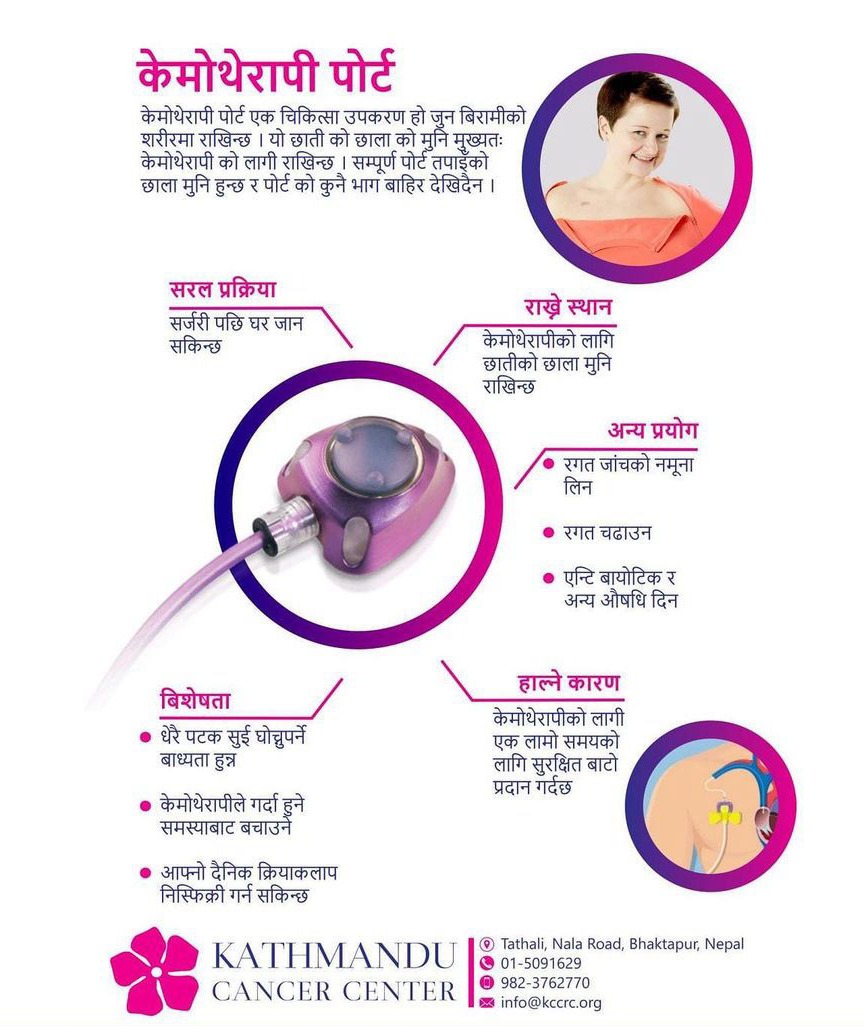
Chemo Port (Port-a-Cath)
A small device placed under the skin for easy, safer IV access during chemotherapy.
- Fewer needle sticks
- Lower vein irritation
- Reliable for infusions & blood draws
How we prepare your chemotherapy
Chemotherapy preparation in KCC, Nepal
Transferring Cancer Treatment from India to Nepal — Step-by-Step
भारतबाट सुरु गरेको क्यान्सर उपचार नेपालमै जारी राख्न सकिन्छ — हामीले सहयोग गर्छौं।
If you started chemotherapy in India, KCC can safely continue the exact regimen at home — same drugs, same standards, Nepali-language care.
- Latest chemotherapy summary (drug names, doses, cycle dates)
- Original prescriptions from your Indian oncologist
- Recent scan reports (CT, PET, MRI) and blood tests
- Biopsy / histopathology report and any molecular tests (EGFR, HER2, etc.)
Exact Regimen Matching
We replicate international protocols (FOLFOX, R-CHOP, AC-T, etc.) with precision.
Medical Record Review
Share your treatment summary — we'll align your next cycles perfectly.
Coordination with Indian Hospitals
We can communicate with your prior oncologist with your consent.
No Compromise on Quality
Same drugs, same standards — with personalized Nepali-language care.
"I completed 3 cycles in Mumbai and continued the rest at KCC. The care was just as good — and much more comfortable being close to family."
— Binda Pr., Breast Cancer Survivor
Common Chemotherapy Regimens at KCC
Our center provides evidence-based chemotherapy protocols following international guidelines. Below are some of the common regimens we administer.
FOLFOX
Folinic acid, Fluorouracil, Oxaliplatin
Commonly used for colorectal cancers. Administered as a 46-hour continuous infusion every 2 weeks.
Paclitaxel / Carboplatin
Taxol + Paraplatin
First-line treatment for ovarian, lung, and other cancers. Typically given every 3 weeks.
FLOT
Fluorouracil, Leucovorin, Oxaliplatin, Docetaxel
Used for gastric and gastroesophageal cancers. Administered every 2 weeks.
AC-T
Doxorubicin, Cyclophosphamide followed by Paclitaxel
Common regimen for breast cancer, given over multiple cycles.
R-CHOP
Rituximab, Cyclophosphamide, Doxorubicin, Vincristine, Prednisone
Standard treatment for non-Hodgkin's lymphoma, typically given every 3 weeks.
FOLFIRI
Folinic acid, Fluorouracil, Irinotecan
Used for metastatic colorectal cancer, often in combination with targeted therapies.
Safe & Certified Chemotherapy Preparation at KCC
At Kathmandu Cancer Center, your safety always comes first. Every chemotherapy medicine is prepared in a modern, ISO-certified clean cabinet under the supervision of trained clinical pharmacists. This ensures that every dose you receive is sterile, accurate, and completely safe.
- 100% sterile preparation — no risk of contamination
- Clinical pharmacists double-check every dose
- Internationally certified process — the same safety standards used in leading cancer hospitals worldwide
Our preparation lab meets international biosafety standards — just like top cancer centers in India and abroad.
Chemotherapy in Nepal vs India: Quality, Cost & Convenience
Many patients are choosing to return to Nepal for treatment. Here's how KCC compares:
| Factor | Nepal (KCC) | India (Metro Cities) |
|---|---|---|
| Avg. Cost per Cycle | NPR 10,000 – 50,000 (~$75–$400) | ₹10,000 – ₹1,00,000 (~$75–$700) |
| Language Support | Nepali & English | Mostly English / Hindi |
| Travel & Stay | Treatment from home with family | Hotels, travel costs add up |
| Protocol Accuracy | NCCN / ESMO guidelines followed | Same international protocols |
| Drug Sourcing | Mostly imported from India / Bangladesh | Same |
| Continuity of Care | Personalized follow-up & counseling | Often fragmented; travel for follow-up |
💡 You get global-standard care at a fraction of the cost — and the comfort of being at home.
Frequently Asked Questions — India & Nepal
Can I continue my chemotherapy from India at KCC?
What is "kimo" treatment?
Are the chemotherapy drugs in Nepal the same as in India?
Do you coordinate with hospitals in India?
Is chemotherapy safer in Nepal?
Chemotherapy & Targeted Therapy Available For
Evidence-based regimens and precision therapies delivered by our multidisciplinary team.
Breast Cancers
Chemotherapy • Targeted therapy • Hormonal therapy
Lung Cancers
Chemo • Targeted (EGFR / ALK / ROS1) • Immunotherapy
Soft Tissue Sarcoma & Bone Cancers
Protocol-based chemotherapy
Blood Cancer, Hodgkin's & Non-Hodgkin's Lymphoma
Chemotherapy • Immunotherapy / Targeted
Gastric, Hepato-Biliary & Pancreatic
Systemic chemotherapy & targeted options
Esophagus, Colon & Rectum
Chemo • Targeted / biologic therapy
Cancers of Ovary, Uterus, etc.
Platinum-based regimens • Targeted therapy like Bevacizumab
Treatment plans are individualized after specialist consultation and staging work-up.
Book AppointmentSide Effects of Chemotherapy
Common short-term effects include nausea, vomiting, diarrhea, fatigue, fever, mouth sores, pain, constipation, easy bruising, and hair loss. Some medicines can also cause long-term or late effects such as lung or heart problems, infertility, kidney issues, nerve tingling (peripheral neuropathy), or a small increase in second cancer risk. Not everyone has the same side effects — your team will explain what to expect and how to manage them.
| Side Effect | What It Feels Like | How KCC Helps |
|---|---|---|
| Nausea / Vomiting | Upset stomach soon after chemo | Modern anti-nausea medicines and diet tips |
| Fatigue | Feeling very tired | Energy-saving plans, gentle activity, treat anemia if needed |
| Mouth Sores | Painful mouth / throat ulcers | Mouth rinses, pain relief, infection prevention |
| Hair Loss | Thinning or falling hair | Scalp cooling system (where available), headwear options |
| Infection Risk | Low immunity (neutropenia) | Growth factor support, fever precautions, quick access to care |
Advantage of Chemotherapy at KCC
We provide comprehensive chemotherapy services through both our comfortable day-care unit and specialized inpatient facilities. Our experienced oncologists and nurses administer advanced protocols like dose-dense regimens when appropriate. Every plan is personalized to your needs, with clear explanations and continuous support.
Day Care Chemotherapy
Our modern day-care unit provides comfortable treatment in a welcoming environment where patients receive chemotherapy and return home the same day.
- Comfortable private and public rooms
- WiFi access
- Family members can accompany patients
Inpatient Chemotherapy
For more complex regimens or patients needing closer monitoring, we offer specialized inpatient chemotherapy services with 24/7 medical supervision.
- Continuous monitoring by oncology nurses
- Management of complex side effects
- Multi-day infusion protocols
- Immediate access to supportive care
Dedicated Team
Medical, hemato-oncology, nursing, pharmacy, and counselors working together for you.
Modern Protocols
Evidence-based regimens, supportive care, and safety monitoring every cycle.
Comfort & Dignity
Comfortable chairs / beds, privacy screens, and family-friendly spaces.
Cost of Chemotherapy in Nepal
Chemotherapy cost in Nepal at KCC typically ranges from NPR 10,000 to 50,000 per cycle. The exact price depends on the drug regimen, cancer type, and whether treatment is delivered in the day-care unit or the inpatient setting. Your oncologist will provide a personalized written estimate after consultation.
Financial Support
Ask about available government support, insurance, or payment options like Sanchaya Kosh or SSF. Our team can guide you through paperwork.
Treatment Estimate
Get a personalized estimate after your first visit. Bring previous reports to help us plan accurately.
Frequently Asked Questions
How long does a chemo session take?
Can I work during chemotherapy?
Will I lose my hair?
What should I bring on chemo day?
Book an Appointment
Speak with our oncology team to discuss your diagnosis and plan the right treatment. For faster planning, please bring previous reports (biopsy, scans, blood tests, etc).
- Address: Tathali, Bhaktapur & New Baneshwor, Kathmandu, Nepal
- Call: 01-5091629
- WhatsApp: 9818226237
- Email: [email protected]
Advanced Blood Cancer Treatment in Nepal
For leukemia, lymphoma, and multiple myeloma, treatment may include combinations of chemotherapy, targeted therapy, immunotherapy, and emerging cellular therapies.
KCC is strengthening its hematology and cellular therapy programs, including preparation for Bone Marrow Transplant (BMT) and CAR-T cell therapy. These programs are currently under development.