New KCC City Clinic —  New Baneshwor → is now open.
English | नेपाली

Breast Cancer Treatment
Complete Care in one place.

Most breast cancers that are found early can be cured. At KCC, we do molecular test to know what is behavour of the cancer and treat it with combination of chemotherapy, surgery ,radiotherapy, targeted therapy immunotherapy etc as needed. You do not need to go abrad for complete treatment.

Breast-Conserving Surgery Mammogram Screening Heart-Saving radiotherapy (DIBH) Immunotherapy


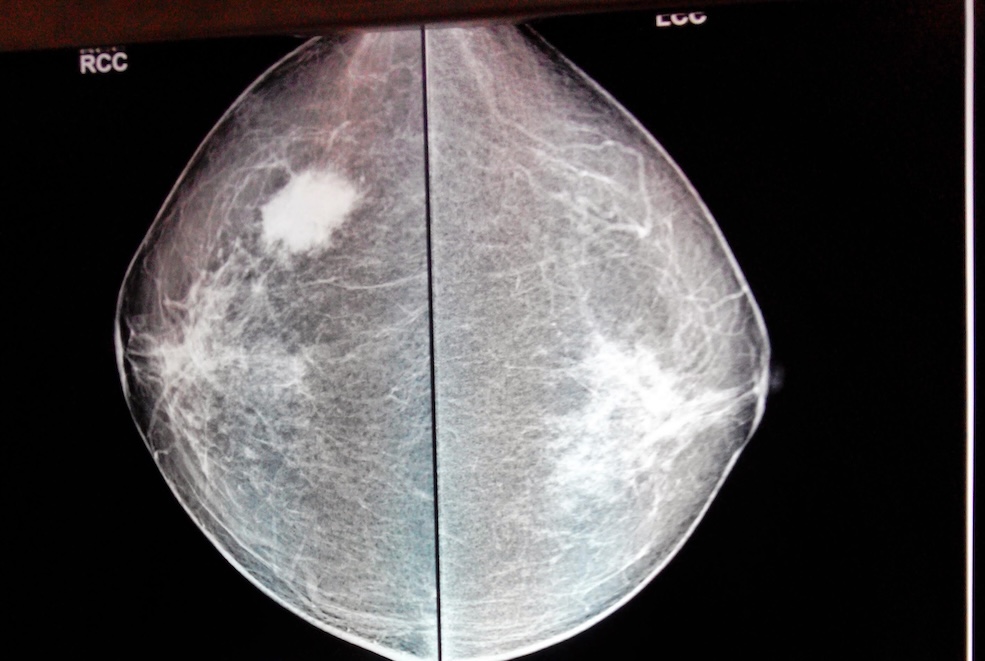
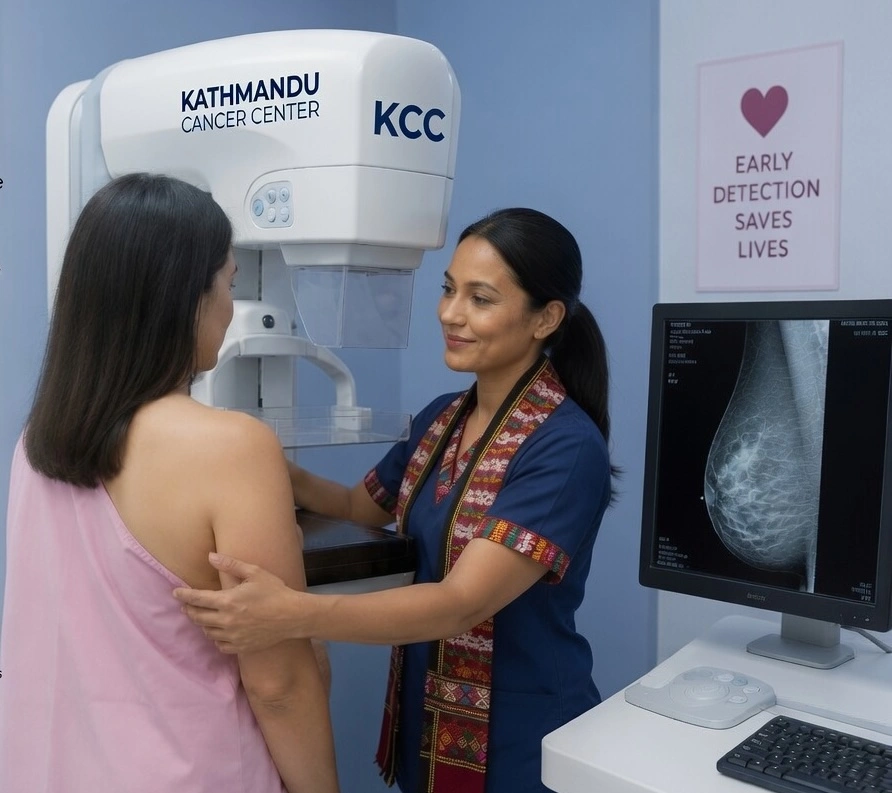
Digital mammogram screening at KCC Nepal

Digital Mammogram

She noticed it while getting dressed. A small lump, maybe the size of a marble. She pressed it once, told herself it was probably nothing, and got on with her day. Six months later she was sitting across from a surgeon being told the cancer had reached her lymph nodes.

This is the story we hear most often — not because Nepali women are careless, but because breast cancer in its early stages causes no pain. The lump that does not hurt is still a lump that needs to be checked.

Breast cancer is the most common cancer in Nepali women. It is also one of the most treatable cancers when found early. At KCC, the full treatment pathway - surgery, radiation, chemotherapy, targeted therapy, hormone therapy, immunotherapy - is available under one roof in Kathmandu.

A note to daughters, sisters, and husbands. Many women in Nepal don't do regular breast examination because they feel embarrassed, or because a family member told them it was probably normal. If someone you love has noticed a lump and has not had it assessed - please help her make that appointment. A cancer found early is almost always curable.

Breast Cancer — At a Glance

Molecular test
Every breast cancer is different. All new diagnoses at KCC are tested for important tests before treatment starts.
ER / PR: Hormone receptors - guide hormone therapy.
HER2: Growth receptor - whether targeted drugs like Herceptin will work for you.
Ki-67: Indicates how quickly the tumour is growing.
BRCA1/2: Genetic mutation —Family history of breast or ovary cancer.
Surgery
For suitable patients, only tumor can be removed and breast can be saved
•Mastectomy : Remove whole breast and armpit nodes.
• Oncoplastic reconstruction discussed before surgery when appropriate.
Radiation (IMRT)
Radiotherapy is routinely recommended after surgery.
• Whole-breast IMRT after lumpectomy (typically 3 weeks).
• Post-mastectomy IMRT for selected high-risk patients.
Heart-Saving Radiotherapy (DIBH) for left-sided breast cancer — keeps radiation away from the heart.
• Palliative radiotherapy for bone or soft-tissue spread.
Targeted therapy
For HER2-positive breast cancer, targeted drugs may be recommended — trastuzumab (Herceptin) and pertuzumab (Perjeta) in combination with chemotherapy. Additional targeted therapies are available for advanced disease.
Hormone therapy
For hormone receptor-positive cancers:
• Tamoxifen — commonly used in pre-menopausal women.
• Aromatase inhibitors (letrozole, anastrozole) — preferred post-menopause.
• Ovarian suppression in selected patients.
• CDK4/6 inhibitors (ribociclib, palbociclib) for advanced disease.
Immunotherapy
For triple-negative breast cancer, pembrolizumab (Keytruda) may be combined with chemotherapy for eligible patients.
PARP inhibitors
For patients with BRCA1 or BRCA2 mutations, targeted medicines such as olaparib may be considered. Genetic testing can be arranged for eligible patients at KCC.
Reviewed by KCC breast oncology team · Follows NCCN, ESMO, St Gallen guidelines · Individual assessment required — all treatment is personalised at KCC.
Know Your Subtype

The Four Molecular Subtypes — Treatment Starts Here

Breast cancer is not one disease. ER, PR, HER2, and Ki-67 results define your subtype — and your subtype determines everything: whether you receive hormone therapy, HER2-targeted drugs, chemotherapy, immunotherapy, or a combination. KCC tests all four markers on every new breast cancer biopsy before any treatment recommendation is made.

Test First. Subtype. Then Treat.

The Same Tumour Size Can Mean Very Different Treatment

A 3cm hormone-positive tumour and a 3cm triple-negative tumour require completely different treatment — different drugs, different timing, different follow-up. This is why the biopsy result, not the scan alone, is what drives your entire treatment plan.

Luminal A — HR+/HER2−/Ki67 low
~40%
Best prognosis · Hormone therapy ± CDK4/6 inhibitors · Chemotherapy often avoidable
Luminal B — HR+/HER2− or + / Ki67 high
~30%
Hormone therapy + chemo · HER2+ Luminal B also gets anti-HER2 agents · Higher recurrence risk
HER2-enriched — HR−/HER2+
~15%
Dual anti-HER2 (trastuzumab + pertuzumab) + chemo · Excellent response to targeted therapy
Triple-Negative — ER−/PR−/HER2−
~15%
Chemotherapy-sensitive · Pembrolizumab if PD-L1+ · PARP inhibitors if BRCA-mutated

Biomarkers Tested at KCC on Every Breast Biopsy

ER (Estrogen Receptor)
Positive → hormone therapy (tamoxifen / AIs)
PR (Progesterone Receptor)
HER2 (IHC 3+ / FISH)
Positive → trastuzumab + pertuzumab therapy
Ki-67 Proliferation Index
High → guides chemotherapy decision
BRCA1 / BRCA2 (germline)
Mutation → PARP inhibitor eligibility
PD-L1 (CPS score)
Positive -> immunotherapy eligibility in TNBC
Warning Signs

When to Come to KCC

Most breast cancers are found by the woman herself - which is why knowing what to look for matters. None of these signs confirm cancer, but all of them need a doctor's assessment, not watchful waiting.

A new lump or thickeningA new, hard, or irregular lump in the breast or armpit - even if it does not hurt, even if it moves when pressed. All new lumps need assessment.
A change in shape or sizeA change in the breast that is new and not related to your menstrual cycle. Dimpling, puckering, or skin that looks like the surface of an orange.
Nipple changes or dischargeA nipple that has turned inward, or any discharge not related to breastfeeding. Persistent rash or skin change on or around the nipple.
Redness or a rash on the breastThat does not resolve within one to two weeks. Inflammatory breast cancer presents as rapid-onset redness and swelling — often without a lump.
Axillary swellingA hard lump in the armpit may be an axillary lymph node — sometimes appearing before the breast lump itself is detectable.
New persistent bone or back painBreast cancer can spread to bone — spine, ribs, hips. New unexplained bone pain in a woman with any breast history warrants urgent assessment.

Mammogram Screening — Finding It Before You Feel It

A mammogram can detect a cancer years before it becomes large enough to feel. Most breast cancers found through screening are at an early stage, when treatment is simplest and cure rates are highest.

KCC offers digital mammography at both the main hospital in Bhaktapur. No referral needed.

  • Women aged 40 and above — mammogram every one to two years.
  • BRCA mutation carriers — annual breast MRI from young age.

Book your mammogram at KCC →

Triple Assessment — Diagnosing a Lump at KCC

Finding a lump does not mean you have cancer. Most lumps in women under 40 are benign. But every lump needs proper assessment:

  • Clinical examination by a specialist oncologist.
  • Imaging — ultrasound for women under 40; ultrasound + mammogram for women 40 and above; MRI for dense breasts or high-risk patients.
  • Core needle biopsy — tissue sample with ER/PR/HER2/Ki-67 testing. Results within three to five days.

All three together achieve over 99% diagnostic accuracy. Once confirmed, every case is reviewed at KCC's multidisciplinary tumour board before any treatment recommendation is made.

Treatment Sequence

The Breast Cancer Treatment Pathway at KCC

Most breast cancers follow a clear sequence. Your specific path is decided at KCC's multidisciplinary tumour board — attended by your surgeon, medical oncologist, radiation oncologist, and pathologist together. No single doctor decides alone.

1

Diagnosis & Biomarker Testing

Core needle biopsy · ER, PR, HER2, Ki-67 · Staging CT · Bone scan if symptomatic · BRCA for selected cases

2

Neoadjuvant Therapy (if indicated)

Chemotherapy ± trastuzumab/pertuzumab (HER2+) or pembrolizumab (TNBC) before surgery — shrinks tumour, tests response

3

Surgery

Lumpectomy (breast preserving) or modified radical mastectomy + axillary node dissection · Reconstruction discussed

4

Post-operative IMRT

Whole-breast IMRT after lumpectomy · Post-mastectomy IMRT if high-risk · Heart-sparing DIBH for left-sided cancer

5

Long-term Systemic Therapy

Hormone therapy 5–10 years (HR+) · Anti-HER2 to 12 months (HER2+) · CDK4/6 inhibitors (metastatic HR+)

Surgical Treatment

Surgery at KCC — Saving the Breast Where Possible

One of the most important conversations after a breast cancer diagnosis is whether the breast can be saved. For most women with early-stage breast cancer, the answer is yes. KCC's surgical team will explain both options honestly — and the choice is always yours.

★ Breast-Conserving

Lumpectomy (Wide Local Excision)

Removes the tumour and a clear margin of normal tissue — the breast is preserved. Always followed by whole-breast IMRT. Decades of research confirm this gives the same survival as mastectomy for most early-stage patients. Suitable when the tumour-to-breast size ratio allows a good cosmetic result.

Complete Removal

Modified Radical Mastectomy

Removal of the entire breast with chest wall muscles preserved, plus axillary node dissection. Indicated for large or multifocal tumours, when breast conservation is not possible, or at the patient's preference. Breast reconstruction is discussed with the surgical team before the operation.

When Nodes Are Positive

Axillary Lymph Node Dissection

Accurate nodal staging determines whether post-mastectomy IMRT and extended systemic therapy are needed. Performed alongside surgery — the results shape the rest of the treatment plan.

After Mastectomy

Breast Reconstruction

Immediate or delayed reconstruction after mastectomy using implant or autologous tissue. Planned pre-operatively. Timing is coordinated with any post-mastectomy IMRT to achieve the best oncological and cosmetic result.

Neoadjuvant First

Downstaging to Lumpectomy

For large HER2+ or triple-negative tumours, starting chemotherapy — with targeted or immune therapy — before surgery can shrink the tumour, converting a mastectomy case into a lumpectomy candidate. Achieving no residual cancer at surgery (pathological complete response) is associated with excellent long-term survival.

Every Case

Tumour Board Review

Before any breast cancer surgery at KCC, the case is presented at a multidisciplinary board — breast surgeon, medical oncologist, radiation oncologist, and pathologist together. You receive a consensus plan, not a single doctor's opinion.

Post-operative Radiotherapy

IMRT — Breast Radiotherapy at KCC

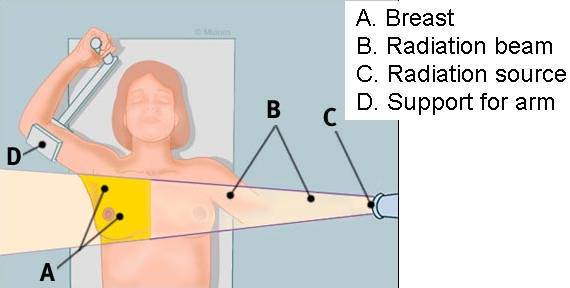
Radiation after breast cancer surgery reduces the risk of local recurrence by approximately half. KCC uses IMRT (Intensity-Modulated Radiotherapy) — a technique that shapes the radiation beam precisely around the breast tissue, reducing the dose reaching the heart and lungs.

After Lumpectomy — Standard

Whole-Breast IMRT

Irradiation of the entire conserved breast after lumpectomy. Typically given over three to five weeks. A boost dose to the tumour bed may be added for selected patients.

After Mastectomy — High-Risk

Post-Mastectomy IMRT (PMRT)

IMRT to the chest wall and regional lymph nodes is recommended for patients with four or more positive axillary nodes, T3/T4 tumours, positive surgical margins, or one to three positive nodes with other high-risk features. Timing is coordinated with breast reconstruction when applicable.

Left-Sided Breast Cancer

Heart-Saving Radiotherapy — DIBH

For cancers of the left breast, the heart sits close to the treatment area. Even small repeated doses of radiation to the heart can increase the risk of heart disease years later.
Deep Inspiration Breath Hold (DIBH) as a technique to move your heart away from the left breast during radiation therapy. You will be asked to take a deep breath and hold it for 20 seconds. While you hold your breath the radiation is delivered. Taking a deep breath moves the heart down and away from the breast to reduce radiation exposure to the heart during treatment.
KCC offers Deep Inspiration Breath Hold (DIBH) to protect the heart during treatment.

Advanced / Metastatic

Palliative IMRT

Short courses — typically five to ten fractions — to control bone pain from metastases, ulcerating chest wall disease, or brain metastases from breast cancer. Rapid, effective symptom relief. KCC schedules palliative radiation promptly so patients are not left waiting in pain.

How DIBH Works — A Simple Explanation

The technique is straightforward in practice. The patient takes a deep breath and holds it for the 20 to 30 seconds it takes to deliver each radiation beam. When the lungs are full of air, the chest expands forward and the heart drops away from the breast tissue — creating a natural gap between the heart and the radiation field.

The patient breathes normally between beams. A whole session takes about 15 minutes. The result is a significant reduction in the dose the heart receives — and meaningfully lower long-term risk of radiation-related heart disease.

★ Medical Oncology

Systemic Therapy

Beyond chemotherapy, KCC provides the full range of modern breast cancer systemic treatment — HER2 dual blockade, CDK4/6 inhibitors, PARP inhibitors, and immunotherapy — each matched precisely to the patient's biomarker profile.

HER2-Targeted Therapy

About 1 in 5 breast cancers has too much of a protein called HER2 on the cell surface. While HER2-positive cancer tends to grow faster, it responds incredibly well to modern drugs designed specifically to block this protein.

The Drugs: Trastuzumab (Herceptin) and Pertuzumab
Usual course - Total 12 months
Are they chemotherapy? These are not chemotherapy; they target only the HER2 protein, meaning they have a milder and more manageable side effect profile.
How it is given It is given as an IV infusion every 3 weeks at KCC’s Day Ward. For early-stage cancer, this treatment usually lasts for a total of 12 months.
Shrinking tumors before surgeryIf a tumor is larger than 2cm or has spread to the lymph nodes, KCC offers a combination of chemotherapy and HER2 drugs before surgery to shrink the tumor. If any cancer remains after surgery, advanced drug like T-DM1 to clear it completelymay be needed.

Trastuzumab is given as an IV infusion every three weeks at KCC's chemotherapy day ward. Confirm specific drug availability with your KCC oncologist at consultation.

Hormone Therapy

About 70% of breast cancers are fueled by female hormones (estrogen and progesterone). This is called HR-positive breast cancer. Treatment involves blocking these hormones so the cancer cannot grow.

For advanced hormone receptor-positive cancer, CDK4/6 inhibitors — a newer class of targeted drug that blocks the cancer's ability to grow — added to hormone therapy have significantly improved outcomes for metastatic disease in recent years.

Chemotherapy

Chemotherapy uses medicines that travel through the bloodstream and attack rapidly dividing cells. For breast cancer, it is used before surgery to shrink a tumour, after surgery to reduce the risk of recurrence, or for cancer that has spread. Most chemotherapy at KCC is given as a day-care infusion — you come in, receive the treatment over a few hours, and go home the same day.

Chemotherapy is recommended for triple-negative and HER2-positive subtypes, for high Ki-67 luminal tumours with node involvement, and for metastatic disease. Delivered at KCC's chemotherapy day ward, with anti-nausea premedication and blood count monitoring before every cycle.

HER2+ / TNBC — Neoadjuvant / Adjuvant

AC → T (Anthracycline → Taxane)

HER2+ — Anthracycline-Free Option

TCbHP — Docetaxel + Carboplatin + HP

TNBC — With Pembrolizumab (KEYNOTE-522)

Paclitaxel + Carboplatin → AC + Pembrolizumab

For PD-L1+ triple-negative breast cancer — pembrolizumab added to neoadjuvant chemotherapy significantly improves complete response rate.

Metastatic — Oral Option

Capecitabine (Xeloda)

Oral chemotherapy tablet taken at home Convenient for outstation patients who cannot travel frequently.

Gemcitabine + Carboplatin

Active in metastatic triple-negative breast cancer.

BRCA-Mutated — Targeted Approach

PARP Inhibitors — Olaparib, Talazoparib

Oral targeted therapy for germline BRCA1/2-mutated, HER2-negative metastatic breast cancer. These drugs exploit the cancer cell's DNA repair weakness. BRCA testing can be arranged at KCC for eligible patients.

Treatment by Stage & Subtype

What Treatment Will I Need?

Treatment is always individualised. Stage alone is not enough — subtype determines the systemic therapy. The table below shows general frameworks; your KCC oncologist will tailor based on your specific pathology, menopausal status, and fitness.

Your Journey

What Happens When You Come to KCC

From your first appointment to the end of treatment, here is what to expect — and what we will explain at every step.

First appointment — come as you are

Bring any imaging or biopsy results you already have. If you have nothing yet, that is fine — come with the symptom and we will arrange everything from there. No referral letter is needed.

Diagnosis

Ultrasound and, if needed, a needle biopsy. Results within three to five days. Once the biopsy confirms cancer, full staging investigations — CT, bone scan if indicated, blood markers — are arranged before the tumour board meets.

Tumour board

Your case is reviewed by the full oncology team before any treatment is recommended. You receive a consensus plan — surgery, radiation, and systemic therapy all planned together, not in sequence by separate specialists working in isolation.

Treatment discussion

Surgery options, radiation plan, systemic therapy sequence — all explained in Nepali, with your family present and welcome. Fertility and breast preservation considerations are discussed before consent is signed, not after.

Treatment

Chemotherapy is given as day-care infusions — no overnight admission. Surgery means three to five days in hospital. Radiation runs daily for three to five weeks. Hormone therapy is a daily tablet you take at home. Targeted therapy infusions are given every three weeks at the day ward.

Follow-up

Three-monthly visits for the first two years, then six-monthly to five years. Annual mammogram of the treated and opposite breast. All follow-up at KCC — no need to travel elsewhere.

Transferring Treatment from India

If you or a family member started chemotherapy or other treatment at a hospital in India and want to continue in Nepal, KCC manages this regularly. We review your treatment records, confirm the protocol, and continue from where you are — without restarting cycles. Bring your surgical histopathology, ER/PR/HER2 results, chemotherapy drug names, and cycle numbers completed. Learn about transferring treatment to KCC →

What to Expect

Managing Side Effects — What We Tell Every Patient

Treatment for breast cancer is manageable for most women, but side effects are real and worth understanding before you start. Knowing what to expect — and knowing that most effects are temporary — makes a significant difference.

Chemotherapy

Fatigue, nausea, and temporary hair loss

Hair regrows after treatment ends. KCC's nursing and support team proactively manages symptoms — anti-nausea medicines, hydration support, and blood count monitoring before every cycle — to keep treatment on schedule. Most patients complete the full course.

Radiotherapy

Temporary skin redness and fatigue

With IMRT, most women finish the course without significant skin breakdown. Skin care guidance is given from the first day of radiation. Fatigue during the course is real — it typically peaks in the final week and improves within a month of finishing.

Hormone Therapy

Hot flushes, joint aches, bone density with long-term use

These are manageable with medication and lifestyle adjustment. The protection hormone therapy gives against recurrence significantly outweighs these effects for most women. Bone density is monitored annually for women on aromatase inhibitors.

HER2 Targeted Therapy

Generally well-tolerated — heart function monitored

Trastuzumab is generally well-tolerated. Heart function (echocardiogram) is monitored every three to four months during the trastuzumab course as a routine precaution. Infusion-related reactions are uncommon and are managed at the day ward.

All subtypes. All stages. In Kathmandu.

From lumpectomy and IMRT to trastuzumab, CDK4/6 inhibitors, and pembrolizumab — KCC provides the complete modern breast cancer treatment programme without requiring you to travel to India for any component. Same drugs, same technology, same international guidelines — your family close by.

City Clinic — New Baneshwor, Kathmandu · Main Campus — Tathali, Bhaktapur · 24-hour helpline

🇳🇵 नेपालीमा

स्तन क्यान्सर — Breast Cancer

स्तन क्यान्सर नेपालमा महिलाहरूमा सबैभन्दा बढी देखिने क्यान्सर हो। तर यो प्रारम्भिक अवस्थामा पत्ता लागे पूर्ण रूपमा निको हुन सक्छ।

धेरै महिलाहरूले गाँठो थाहा पाउँछन् — तर दुखेको नभएकाले वा परिवारले "केही हुन्न" भनेकाले ढिलो गर्छन्। त्यही ढिलाइले क्यान्सरलाई फैलिने मौका मिल्छ। गाँठो दुखेन भन्दैमा जाँच नगरी बस्नु उचित छैन।

यी लक्षण देखिए तुरुन्त डाक्टर कहाँ जानुहोस्

स्तन वा काखीमा नयाँ गाँठोदुखेको नभए पनि, चिप्लिए पनि — जाँच गराउनुहोस्।
स्तनको आकार वा आकृतिमा परिवर्तनस्तनको छालामा खाँचो पर्नु, सुकेको जस्तो देखिनु।
निप्पलबाट असामान्य पानी आउनुवा निप्पल भित्र घुस्नु — तुरुन्त जाँच गराउनुहोस्।
स्तनको छालामा रातोपन वा दागजुन एक–दुई हप्तामा ठीक नहुने।

KCC मा के उपलब्ध छ?

शल्यक्रिया

Lumpectomy वा Mastectomy

सम्भव भएसम्म स्तन बचाइन्छ (Lumpectomy)। आवश्यक परेमा पूरै स्तन हटाउने शल्यक्रिया (Mastectomy)। निर्णय रोगीसँग मिलेर गरिन्छ।

विकिरण (IMRT/DIBH)

हृदय बचाउने विकिरण

शल्यक्रिया पछि विकिरण। बायाँ स्तनको क्यान्सरको लागि DIBH प्रविधि — गहिरो सास लिँदा मुटु विकिरण क्षेत्रबाट टाढा हुन्छ।

केमोथेरापी

दिनको उपचार — भर्ना नचाहिने

शल्यक्रियाअघि वा पछि दिइन्छ। धेरैजसो बिरामी उपचार गरेर उही दिन घर फर्कन्छन्।

HER2 Targeted Therapy

Trastuzumab (Herceptin)

HER2 positive क्यान्सरको लागि लक्षित औषधि। केमोथेरापीसँगै दिइन्छ। यो केमोथेरापी होइन — यो HER2 लाई मात्र लक्षित गर्ने औषधि हो।

Hormone Therapy

Tamoxifen / Letrozole

Hormone receptor positive क्यान्सरको लागि दैनिक चक्की। ५ देखि १० वर्षसम्म लिइन्छ। घरमै खाइन्छ — अस्पताल जानु पर्दैन।

Immunotherapy

Pembrolizumab

Triple-negative breast cancer का योग्य बिरामीहरूको लागि। केमोथेरापीसँग मिलाएर दिइन्छ।

म्यामोग्राम स्क्रिनिङ: ४० वर्ष वा माथिका महिलाहरूले नियमित म्यामोग्राम गराउनु पर्छ। परिवारमा स्तन क्यान्सरको इतिहास छ भने ३० वर्षदेखि नै सुरु गर्नुहोस्। KCC मा भक्तपुर र New Baneshwor दुवै ठाउँमा उपलब्ध छ — कुनै referral चाहिँदैन।

भारत जानु पर्दैन। सबै उपचार नेपालमै — आफ्नै परिवारसँग।

WhatsApp मा सम्पर्क गर्नुहोस् 01-6634300 अपोइन्टमेन्ट बुक गर्नुहोस्
Common Questions

Breast Cancer — Frequently Asked Questions