
 Book Appointment
Your Blood Report Came Back Abnormal.
A few weeks ago, a young woman came to see me at our clinic in New Baneshwor. She was holding a blood report with several numbers marked in red. She had barely slept. She looked at me and said, “Doctor, is it blood cancer?”
I see this kind of fear almost every day. And almost every time, the answer is no.
Her problem turned out to be severe iron deficiency. Years of heavy periods that everyone around her had told her were normal. On top of that, she was recovering from a mild viral fever that had dropped her platelets a little. With iron tablets, better food, and simple follow-up, she was fine. Her sleep came back, and so did her energy.
So if you’re sitting with an abnormal report right now, take a breath. Most abnormal blood reports in Nepal are caused by things we see and treat all the time. Let me explain what your report might mean in simple words.
Your Blood Test Has Three Main Parts
A CBC, or Complete Blood Count, looks at three types of cells in your blood.
Hemoglobin is what carries oxygen to your whole body. When it is low, you may feel tired, dizzy, pale, or short of breath.
White blood cells are your body’s infection fighters. They go up when you have an infection or inflammation. They often go down after a viral fever like dengue or flu.
Platelets are tiny cells that help your blood clot. When they are low, you might bruise easily, get small red spots on your skin, or have nosebleeds. When they are high, it is often your body reacting to something else like inflammation or even iron deficiency itself.
These three numbers give your doctor clues. But a single number slightly outside the normal range is very common and often means nothing by itself.
What Usually Causes Abnormal Reports in Nepal
Most abnormal results we see are from a handful of very treatable reasons.
Iron Deficiency: Incredibly Common, Especially in Women
In Nepal, around 4 out of every 10 women of childbearing age are anemic. (Source:2022 Nepal Demographic and Health Survey). Most of that is from lack of iron. The reasons are everywhere. Many of us eat mostly rice, dal, and vegetables with very little meat or iron-rich greens. Hookworm infection, common when people walk barefoot in rural areas, slowly drains iron. And many women have heavy monthly bleeding that nobody tells them is worth checking. They live with it for years while their hemoglobin keeps dropping. If your hemoglobin is low and your red cells are small, iron deficiency is the first thing we look for.
Vitamin B12 Deficiency in Vegetarians
If you eat a strictly vegetarian diet for years and you feel tired, have tingling in your hands or feet, or your report shows large red blood cells, you might be low on vitamin B12. This is very common in Nepal. B12 is found mainly in animal foods, so strict vegetarians and vegans are at high risk. It is easy to fix with supplements or injections.
Low Platelet Count (Thrombocytopenia): Causes in Nepal
During monsoon and right after, we see hundreds of people with dengue. It drops your platelets. The fever passes, but the numbers stay low for a week or two. This causes so much anxiety. I spend a lot of time reassuring people that the numbers will climb back on their own. If you have no serious bleeding and your platelet trend is upward, your body is healing. There is no magic medicine needed, just rest, hydration, and time.
Sickle Cell Disease in the Tharu Community
Many people in Nepal think sickle cell is an African disease. It is not. It is common in some Terai indigenous groups, especially the Tharu community. I remember a 20 year old man from Kailali who came to us with years of anemia and bone pain. He had been given iron tablets and painkillers at different health posts. Nobody had tested him for sickle cell. When we finally did, we found he had sickle cell disease. His red cells would become sickle shaped and get stuck in his blood vessels, causing pain. He had suffered without a name for his condition. We started him on simple treatment like folic acid, a medicine called hydroxyurea, and taught him what triggers to avoid. His pain became much less and he returned to his studies.
If you are from the Tharu community or other Terai indigenous groups and you have lifelong anemia, bone pains, or sometimes yellow eyes, ask your doctor about a sickling test. It is simple and can make a huge difference.
Thalassemia Trait
Thalassemia is another inherited blood condition that runs in many families across Nepal, including some Newar and Terai communities. People with thalassemia trait often have lifelong mild anemia with very small red cells. It looks like iron deficiency on the report, but iron tablets do not help. If your anemia never improves with iron and you have a family history of mild anemia, you might be carrying the trait. A simple test called hemoglobin electrophoresis can tell. You usually do not need treatment, but knowing is important for your peace of mind and for family planning.
High White Blood Cell Count (Leukocytosis): What It Means
A high white cell count is one of the results that worries people the most, because "leukemia" is often the first word that comes to mind. In my clinic, the truth is almost always more ordinary.
White cells rise whenever your body is fighting something. A chest infection, a urine infection, typhoid, an infected wound, even a bad tooth abscess can push the count up for days to weeks. Inflammation from any cause does the same — a flare of arthritis, a burn, even a hard workout or heavy exertion in the days before your blood was drawn. Some common medicines raise it too: steroids taken for asthma, allergies, or joint pain are a frequent cause we see, along with certain inhalers.
Smoking is another quiet one. Long-term smokers often run a mildly elevated white count as their baseline — it usually needs no treatment beyond addressing the smoking itself.
What makes us look closer is the pattern, not the single number: a very high count with no obvious infection, a count that keeps climbing on repeat tests, an abnormal-looking blood film, or a rising WBC alongside a drop in hemoglobin or platelets. Those combinations point toward the smaller group of causes — chronic infections like TB, or in rare cases a blood cancer — that need proper workup. On its own, a single mildly raised WBC after a cold or a course of steroids is not something to lose sleep over.
Low White Blood Cell Count (Leukopenia): What It Means
A low white count is common right after a viral illness — dengue, typhoid, flu, or even a bad cold can drop it for a week or two while your body recovers. This is usually temporary and needs no treatment; it corrects itself once you're back to normal health.
Certain medicines lower the white count too - some antibiotics, thyroid medicines, and drugs used for autoimmune conditions are common culprits we check for. B12 or folate deficiency, which we see often in strict vegetarians in Nepal, can also lower the white count alongside anemia.
We start paying closer attention if the count stays low for more than a few weeks with no clear cause, if you're getting frequent infections or mouth ulcers that won't heal, or if the low WBC comes together with low hemoglobin and low platelets - a pattern that needs a closer look at the bone marrow. On its own, after a recent fever, a mildly low count is one of the most common and least worrying results we see.
When Should You See a Blood Specialist (Hematologist) ?
Many abnormal reports can be handled by your regular doctor. But it is good to see a hematologist if:
- More than one blood count is abnormal and it does not get better.
- You repeat the test after 3 or 4 weeks and the numbers are still wrong, even after treatment like iron tablets.
- You are losing weight without trying, sweating heavily at night, or have a fever that will not go away.
- You bleed or bruise too easily, your gums bleed when you brush, or you get frequent nosebleeds with no clear cause.
- You have a family background or belong to a community where sickle cell or thalassemia is common, and you have had anemia all your life with pain or jaundice.
What Kinds of Tests Might a Doctor Do?
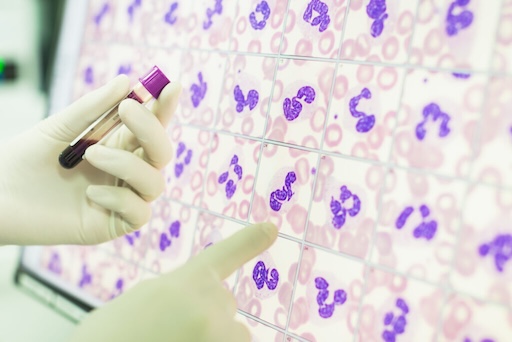
We always start simple. Usually we just repeat your CBC and look at your blood under a microscope. That one step can show us a lot, from vitamin deficiencies to sickle cells to signs of infection. We might check your iron, B12, and folate levels. For some people we do hemoglobin electrophoresis to rule out thalassemia or sickle cell. Only in very few cases do we need to do a bone marrow test, and we will explain exactly why if it comes to that.
We Are Here to Help
At Kathmandu Cancer Center, our hematology team sees all of this every day. From simple iron deficiency to sickle cell disease, from platelet drops after dengue to more complex blood disorders. We will listen to your story, look at your diet, your family background, and explain your report in plain words. You will get a clear plan that makes sense.
If you have a blood report that worries you, get in touch.
- 📞 Call KCC: 01-5091629 or 01-5312123
- 💬 WhatsApp your report for an initial look: +977 9818226237
- 📍 Visit us at our main campus in Tathali, Bhaktapur, or our city clinic in New Baneshwor, Kathmandu.
Frequently Asked Questions
“Does an abnormal blood test mean blood cancer?”
No. In over 95 percent of cases, it is something else. Nutritional gaps, infections, inflammation. Cancer is rare.
“After dengue, my platelets dropped. How long until they are normal?”
Usually 1 to 2 weeks after the fever ends. Some people take a little longer. As long as the trend is going up, you are on the right track.
“How common is iron deficiency in Nepal?”
Very common. About 40 percent of women of reproductive age are anemic, mostly from low iron. It is one of our biggest silent health problems.
“Is sickle cell really found in Nepal?”
Yes. It is found in the Tharu community and other Terai indigenous groups. It is not rare, just underdiagnosed. We see it at our center regularly.
“What causes a high WBC count?”
Most often an infection, inflammation, or a medicine like steroids. It is only rarely a sign of blood cancer.
“What causes a low WBC count?”
Usually a recent viral illness like dengue, typhoid, or flu. It typically returns to normal within a few weeks.
“When should a high or low WBC count worry me?”
If it doesn't correct after 3-4 weeks, keeps climbing or falling on repeat tests, or comes with fever, weight loss, or frequent infections - that's when to see a hematologist.
Book an Appointment at KCC
Kathmandu [City Clinic ,New baneshwor] · Bhaktapur [Hospital,Tathali] ·
Request an Appointment (Whatsapp) →References
- [1] https://dhsprogram.com/publications/publication-FR379-DHS-Final-Reports.cfm