
 Book Appointment

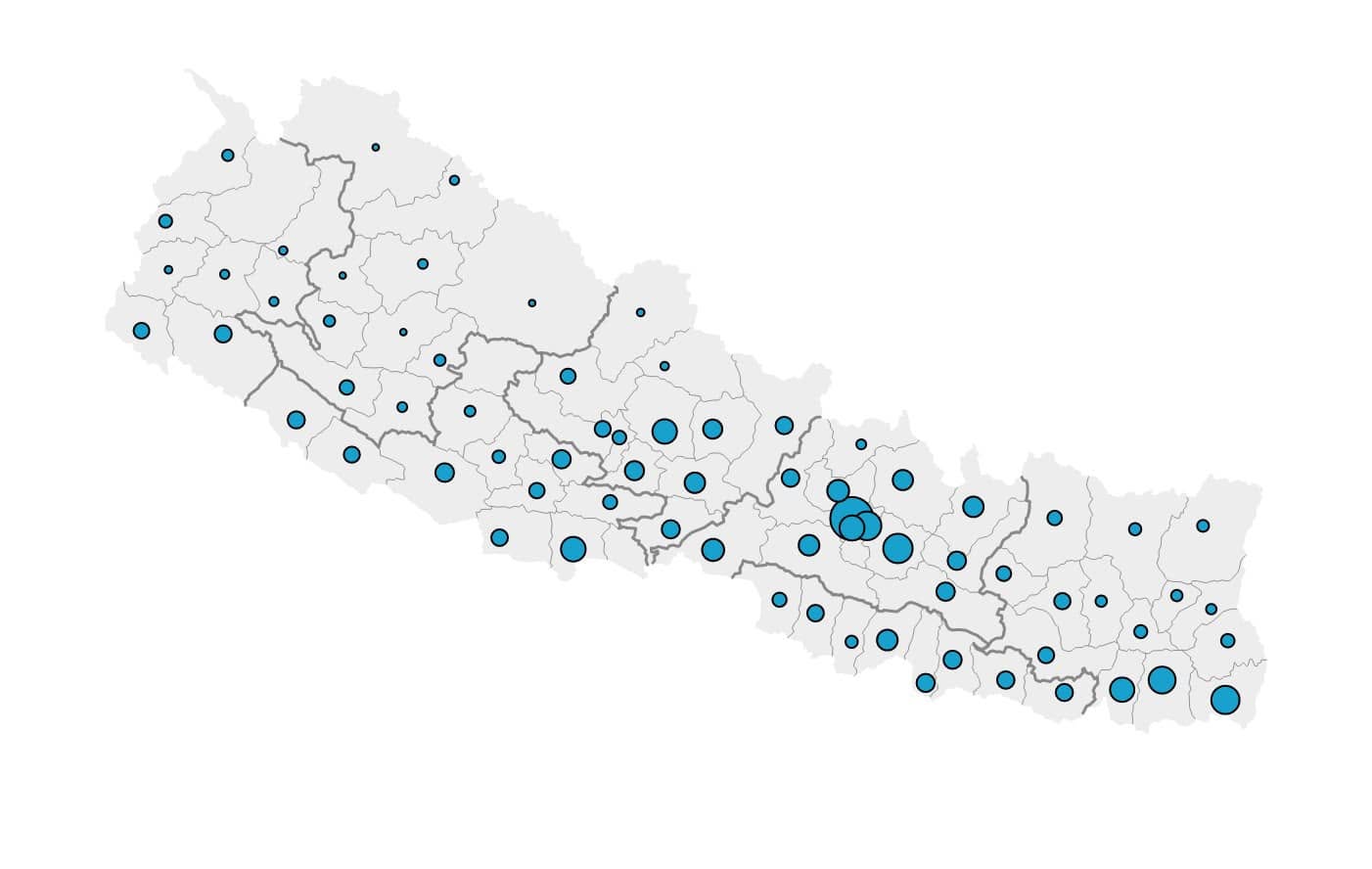
If you live in Nepal, you’ve probably heard someone in your family, your neighbourhood, or your close circle mention the word “cancer.” It’s a heavy word, and honestly, it feels like we’re hearing it more and more often. The numbers sadly back that feeling up — cancer is quietly becoming a bigger part of our story. But instead of just being scared, let’s look at what the latest data actually tells us, in simple, everyday language. Because knowing the facts is the first real step any of us can take to protect ourselves and the people we love.
Key Facts from GLOBOCAN 2024 (Nepal)
- 24,499 new cancer cases estimated in 2024
- 17,213 cancer deaths
- 46,747 people living with cancer diagnosed in the last 5 years
1 cancer: Stomach cancer (3,159 cases)
- 74% rise in cases predicted by 2050 if current rates hold
- 90.1 age‑standardised incidence rate per 100,000; mortality rate 64.1 per 100,000
How Many Cancer Cases Are There in Nepal in 2024?
Let’s talk straight numbers. The latest GLOBOCAN 2024 estimate puts new cancer cases at 24,499 and deaths at 17,213 for the year. That means cancer is now one of the heaviest health burdens we carry as a country.
Think about it this way: before turning 75, about 1 in every 10 Nepali will develop some form of cancer. It’s not a distant “someone else’s problem” — it’s a real lifetime risk for us all.
What Is the Most Common Cancer in Nepal Right Now?
The top cancer has shifted. Stomach cancer now leads, with an estimated 3,159 new cases in 2024. The five most frequently diagnosed cancers are:
- Stomach – 3,159 cases
- Oesophagus (food pipe) – 2,069 cases
- Breast – 1,746 cases
- Liver – 1,623 cases
- Cervix (cervical) – 1,532 cases
For deaths, stomach cancer again tops the list, followed by oesophagus, liver, lung, and gallbladder cancers.
What Are the Most Common Cancers in Men and Women in Nepal?
Cancer doesn’t play fair, and the types hitting Nepali men and women don’t look the same.
For Nepali men:
- Stomach
- Oesophagus,
- Liver,
- Mouth/lip,
- Lung cancers
Tobacco (smoking & chewing), H. pylori infection, alcohol, occupational exposures
For Nepali women:
- Breast cancer
- Cervical cancer
- Stomach
- Ovarian,
- Oesophagus cancers.
Cervical cancer remains a leading cause of death, largely because routine screening reaches only a fraction of women.HPV infection, indoor smoke, delayed screening, reproductive factors are main factors
What Is the “Age-Adjusted Rate, AAR ” and Why Does It Matter?
You might see “age-adjusted rate” and wonder what it means. Let me make it simple.
Older people naturally get sick more often than younger people. So if you compare a city with many elderly residents to a village full of young people, the city will look like it has more cancer — unfairly. The age-adjusted rate (AAR) is a mathematical tool that “smoothes out” these age differences so we can see the true risk.
Nepal’s overall AAR for cancer incidence in 2024 is 90.1 per 100,000 people, and the mortality AAR is 64.1 per 100,000. (Note: Earlier methods used a different standard population, so direct comparison with older AAR figures should be done carefully.)
Why Are Cancer Cases Going Up in Nepal?
The rise isn’t random. Researchers point to a handful of clear risk factors we can’t afford to ignore.
- Tobacco remains the number one villain. Over 35% of cancers in Nepali men and 17% in Nepali women are linked to tobacco. Whether it’s cigarettes, bidis, khaini, or gutka, tobacco is fuelling the cancer fire.
- Infections we can prevent or treat. HPV causes almost all cervical cancers. H. pylori bacteria drive stomach cancer. Hepatitis B and C lead to liver cancer. Vaccines, antibiotics, and antiviral treatments exist for all of these.
- Urban lifestyle and environmental shifts. In Kathmandu and other cities, air pollution, processed food, and physical inactivity are climbing. These slow changes add up over decades and raise the risk of lung, colorectal, and breast cancers.
- Indoor smoke. In rural Nepal, many women still cook with biomass fuels, breathing smoke that damages lung tissue over years — contributing to lung cancer even among non-smokers.
Where Can I Get Cancer Screening or Treatment in Nepal?
If you notice persistent warning signs — an unexplained lump, sudden weight loss, a cough lasting more than three weeks, or abnormal bleeding — see a doctor promptly. Nepal’s major cancer care centres include:
- B.P. Koirala Memorial Cancer Hospital, Bharatpur, Chitwan
- Bhaktapur Cancer Hospital, Dudhpati, Bhaktapur
- Kathmandu Cancer Center, Bhaktapur & New Baneshwor
- Nepal Cancer Hospital and Research Center, Harisiddhi, Lalitpur
- Tribhuvan University Teaching Hospital (Oncology Dept.), Maharajgunj, Kathmandu
- Purwanchal Cancer Hospital, Birtamode, Jhapa
What Can I Actually Do to Lower My Cancer Risk?
Prevention and early detection save lives. Here are the most powerful steps you and your family can take today:
- Quit tobacco in all forms. The reduction in cancer risk starts almost immediately.
- Get vaccinated. The HPV vaccine for girls (and boys, where available) prevents cervical and other HPV‑related cancers. Hepatitis B vaccination prevents liver cancer.
- Screen regularly. Women aged 30–60 should have a cervical screening (VIA or Pap test) every 3–5 years. Breast self‑exams and clinical breast exams help catch changes early.
- Listen to your body. A cough that won’t go away, an unusual lump, a sore that doesn’t heal, unexplained weight loss — these are whispers you shouldn’t ignore.
- Small lifestyle changes matter. Add fresh vegetables and fruit to your dal bhat, move your body daily, and improve kitchen ventilation if you cook with solid fuels.
Cancer is a tough opponent, but we’re not powerless. Knowing the numbers, understanding our own risks, and taking those simple proactive steps is how we flip the script. Share this with a friend, remind your mother to get screened, and nudge your dad to ditch that cigarette. The conversation itself is a form of protection. Stay aware, stay healthy, and please don’t skip those check‑ups.
Book an Appointment at KCC
Kathmandu [City Clinic ,New baneshwor] · Bhaktapur [Hospital,Tathali] ·
Request an Appointment (Whatsapp) →Frequently Asked Questions
What is the most common cancer in Nepali women?
Breast cancer is the most frequently diagnosed cancer in Nepali women, but cervical cancer remains a leading cause of cancer death, especially in areas with low screening coverage.
Are cancer rates really rising in Nepal?
Yes. Cases and deaths are increasing due to an ageing population, persistent tobacco use, urban lifestyle changes, and better detection that uncovers previously missed cases. GLOBOCAN projects a 74% increase in new cases by 2050.
Can cervical cancer be prevented?
Almost entirely. The HPV vaccine and regular cervical screening (VIA or Pap test) can prevent the vast majority of cervical cancers.
Where can I find reliable cancer data for Nepal?
GLOBOCAN 2024 (WHO/IARC) and the Nepal Health Research Council’s population‑based cancer registry provide the most authoritative estimates. A national, high‑quality cancer registry is still being developed.
References
Medical Disclaimer: This article is intended strictly for public awareness and educational purposes. It does not replace professional medical advice, diagnosis, or treatment. Always consult a qualified physician or registered oncologist regarding any medical condition or health symptoms.