
 Book Appointment
When patients search for breast cancer treatment in Nepal, one of their biggest worries is the duration of radiotherapy.
Traditionally, post-surgery radiation therapy required 25 to 28 daily hospital visits spread over 5 to 6 weeks. For patients traveling to Kathmandu from the Terai, hill districts, or neighboring regions, staying in the capital for over a month created significant financial and emotional strain.
At Kathmandu Cancer Center (KCC), we deliver hypofractionated radiotherapy—a modern, internationally backed treatment method that completes your full radiation course in 3 weeks (15 sessions) or even 1 week (5 sessions) with identical cure rates.
October-Breast Cancer Awareness Month
During October–November 2026, KCC is offering routine mammogram screening for Rs. 1,250 instead of Rs. 2,500 as Pink October offer .
Learn more about mammogram screening during Pink October and book your appointment →
What Is Hypofractionated Radiotherapy? (Shorter Treatment, Same Results)
"Hypofractionation" simply means delivering slightly higher, carefully calibrated doses of radiation in fewer total sessions.
Instead of spreading small doses over 5 to 6 weeks, modern technology allows radiation oncologists to target cancer cells safely in a shorter timeframe without increasing long-term side effects.
Proven Global Standards
- 15-Session Regimen (3 Weeks): Backed by global studies (like the UK START-B trial), this is now the standard recommendation by global bodies including ASTRO and ESMO.
- 5-Session Regimen (1 Week): Based on the landmark FAST-Forward trial for select early-stage patients.
Why Choose Kathmandu Cancer Center for Breast Cancer Treatment?
1. Advanced VMAT Technology for Heart & Lung Safety
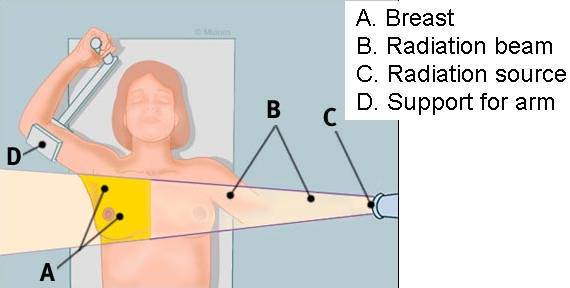
For left-sided breast cancer, protecting the heart and lungs is critical. KCC uses Volumetric Modulated Arc Therapy (VMAT) to shape radiation beams precisely around the breast tissue, minimizing radiation dose to surrounding organs.
2. Lower Total Cost & Less Travel
A 3-week course reduces hotel stays, transportation costs, and time away from work and family—making high-quality care accessible right here in Nepal without needing to travel to India.
3. Experienced Institutional Care
KCC has routinely delivered hypofractionated radiation since 2018. It is our standard institutional protocol, supported by an experienced team of radiation oncologists, medical physicists, and radiation technologists.
Frequently Asked Questions (FAQ)
Is 3-week radiation as safe as 5-week radiation?
Yes. Extensive global clinical trials tracking thousands of patients over 10+ years show identical cancer control rates and comparable side-effect profiles between 3-week and 5-week courses.
Who is eligible for shorter radiation courses?
Most patients requiring radiation after breast-conserving surgery (lumpectomy) or mastectomy qualify. Your radiation oncologist at KCC will review your scan and pathology reports to confirm your eligibility.
Take the Next Step
If you or a loved one are exploring options for breast cancer treatment in Nepal, contact Kathmandu Cancer Center to schedule a consultation with our radiation oncology team.
What Is Short course RT (Hypo-fractionation)?
Conventional radiotherapy typically delivers 1.8–2 Gy per fraction. Hypofractionation delivers 2.4–3.3 Gy per fraction, exploiting the favourable radiobiology of breast cancer (low α/β ratio ~3–4 Gy) to compress the course without sacrificing tumour control. Two landmark regimens now define standard practice globally:
- UK START-B: 40 Gy in 15 fractions over 3 weeks — equivalent 10-year outcomes to conventional 50 Gy/25#.
- FAST-Forward: 26 Gy in 5 weekly fractions — non-inferior at 5 years, now endorsed by ASTRO, ESMO, and ESTRO.
The Evidence Base
The 2023 ASTRO guidelines on breast hypofractionation give a strong recommendation for moderately hypofractionated whole-breast irradiation (WBI) for virtually all patients requiring adjuvant radiotherapy after breast-conserving surgery, regardless of age, tumour grade, receipt of chemotherapy, or laterality. The data convincingly show no meaningful difference in local recurrence, survival, or late toxicity — including cardiac dose for left-sided cancers when IMRT/VMAT planning is used.
Who Is a Good Candidate?
Most patients requiring adjuvant WBI after breast-conserving surgery qualify. Hypofractionation is also increasingly used after mastectomy (post-mastectomy radiotherapy, PMRT) and for regional nodal irradiation. Relative considerations include:
- Breast size: Large, pendulous breasts may have greater dose inhomogeneity — VMAT planning mitigates this at KCC.
- Simultaneous integrated boost (SIB): Tumour bed boost can be delivered concurrently, avoiding extra fractions.
- Implant reconstruction: Still evolving — discuss with your radiation oncologist.
- Bilateral breast cancer: Cardiac constraints require careful dosimetric review.

Why Does This Matter for Patients in Nepal?
Nepal's cancer burden is rising, with breast cancer now the most common cancer in women. Many patients travel from Terai, hill districts, or even India for treatment. A 15-fraction course over three weeks versus 25 fractions over five weeks translates directly to lower travel costs, fewer days of lost income, and faster return to family and work. For patients deciding between treatment in Nepal versus India, KCC's hypofractionation capability and VMAT infrastructure close the gap with tertiary Indian centres — at a fraction of the cost.
What to Expect at KCC
Patients referred for adjuvant breast radiotherapy at KCC undergo a CT simulation (planning scan), followed by 3–5 working days of dosimetric planning. Treatment is then delivered on our Linear accelerator using VMAT. A typical 15-fraction course runs Sunday–Thursday over three weeks. Side effects during treatment include mild skin redness (erythema) and fatigue; late effects such as fibrosis are low with modern dosimetry.
Key Takeaways
- Hypofractionated radiotherapy (15 fractions, 3 weeks) is the global standard for most breast cancer patients after breast-conserving surgery.
- Cancer control rates are equivalent to conventional 25-fraction courses; side effects are similar or better.
- KCC has delivered VMAT-based hypofractionation since 2018 - it is our institutional standard, not a pilot.
- Shorter courses reduce travel burden and cost, making KCC an accessible choice for patients across Nepal and from India.
- Eligibility should be confirmed with your radiation oncologist; most patients with early to locally advanced breast cancer qualify.
Book an Appointment at KCC
Kathmandu [City Clinic ,New baneshwor] · Bhaktapur [Hospital,Tathali] ·
Request an Appointment (Whatsapp) →