
 Book Appointment
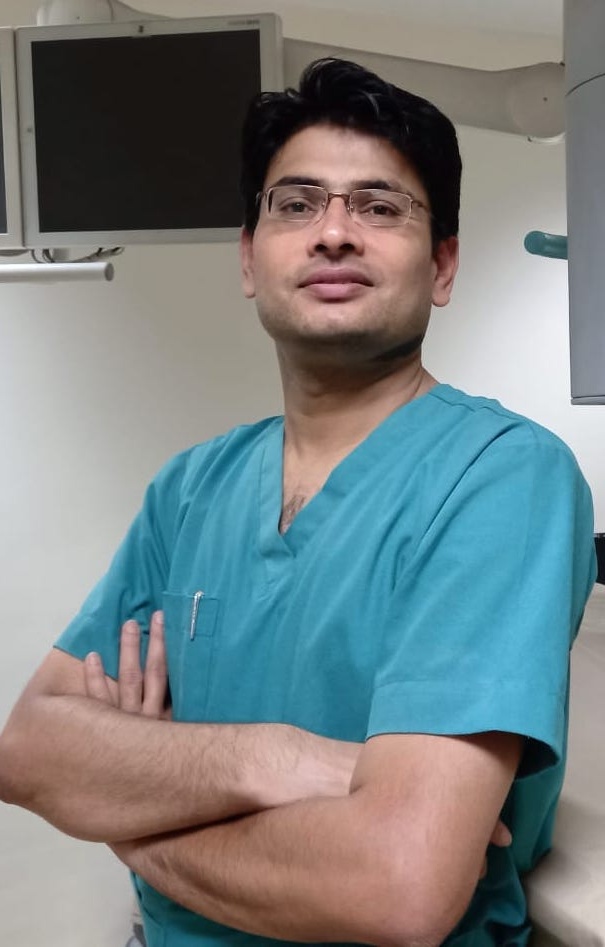
About Dr. Deep Lamichhane
Dr. Deep Lamichhane is a Consultant Surgical Oncologist at Kathmandu Cancer Center with comprehensive expertise spanning breast cancer, gastrointestinal oncology, hepatopancreaticobiliary (GI-HPB) surgery, and peritoneal oncology. He completed his MS in Surgery and pursued two rigorous, specialized fellowships at Tata Medical Centre, Kolkata—India's premier dedicated cancer hospital—in Surgical Oncology and GI-HPB Surgery, spanning three years of advanced training.
In breast cancer surgery, Dr. Lamichhane is proficient in breast-conserving surgery (lumpectomy), oncoplastic reconstruction, sentinel lymph node biopsy (SLNB), wire-guided excision of non-palpable lesions, and imaging-guided procedures. His oncoplastic approach combines cancer removal with cosmetic reshaping—redistribution of breast tissue, reduction techniques, or minor implant-assisted reconstruction—allowing many patients to preserve their breasts while achieving excellent oncologic safety and cosmetic outcomes.
Beyond breast surgery, his dual-fellowship background equips him to handle complex cancers that do not respect clean anatomical boundaries, requiring expertise across multiple surgical domains. Dr. Lamichhane performed the first Cytoreductive Surgery (CRS) combined with Hyperthermic Intraperitoneal Chemotherapy (HIPEC) in Nepal—a complex procedure for peritoneal carcinomatosis that was previously unavailable in the country. He has built the most advanced cancer surgery program at KCC, routinely performing sphincter-preserving rectal surgery, complex HPB resections, pelvic exenterations, and salvage surgeries for recurrent cancers—all with outcomes comparable to leading South Asian cancer centers.
More recently, Dr. Lamichhane has established the PIPAC (Pressurised Intraperitoneal Aerosol Chemotherapy) programme at KCC—a minimally invasive laparoscopic approach to delivering chemotherapy to peritoneal surfaces, used in selected patients either as palliation or as part of a sequential peritoneal treatment strategy. This makes KCC one of very few centres in South Asia offering both CRS-HIPEC and PIPAC.
Beyond technical excellence, Dr. Lamichhane is known for planning complete treatment pathways, not just operating. Every case is reviewed through the KCC Multidisciplinary Tumor Board alongside medical and radiation oncologists, ensuring that surgery is one step in a carefully coordinated, protocol-driven plan. He was instrumental in starting surgical services at KCC and continues to lead the development of advanced cancer surgery in Nepal.
Personalized. Multidisciplinary. Complete Care.
Dr. Lamichhane believes that surgery is never an isolated event but one step in a carefully coordinated treatment pathway. Whether managing breast cancer, gastrointestinal malignancy, or complex peritoneal disease, he ensures every patient's case is discussed in the Multidisciplinary Tumor Board, integrating surgical, medical, and radiation oncology to deliver evidence-based, protocol-driven care from diagnosis through survivorship. For breast cancer, his goal is oncologic safety combined with quality of life and cosmetic outcome.
"Cancer surgery that respects both the disease and the person. Advanced technique. Evidence-based judgment. Genuine partnership with medical and radiation colleagues."
Areas of Expertise
Cancer Types Treated
Surgical Procedures Performed at KCC
Lumpectomy with oncoplastic reconstruction, wire-guided excision for non-palpable lesions, and imaging-guided procedures. Combines cancer removal with cosmetic reshaping (tissue redistribution, reduction, or minor implant-assisted reconstruction).
Oncologically safe with excellent cosmetic results, avoiding mastectomy in suitable cases.
Staging procedure using radioactive dye and/or blue dye to identify the first lymph node(s) draining the tumor. If cancer-free, full axillary dissection can be avoided.
Reduced arm swelling, better lymphedema-free survival, maintained oncologic accuracy.
Integration of cancer removal with cosmetic reshaping techniques in a single procedure—breast tissue redistribution, reduction, volume displacement, or minor implant-assisted reconstruction.
Single-stage surgery with preserved breast anatomy and excellent cosmetic outcome; avoids staged operations.
Two-part procedure for peritoneal carcinomatosis: removal of all visible tumors followed by heated intraperitoneal chemotherapy to eliminate microscopic residual disease.
Dr. Lamichhane performed the first CRS+HIPEC in Nepal, making this life-extending procedure available without international travel.
Pancreaticoduodenectomy for pancreatic head and periampullary cancers; a complex operation requiring reconstruction of the bile duct, pancreas, and stomach.
Performed with mortality and complication rates comparable to major Indian cancer centres.
Liver resection for primary liver cancer (HCC) and metastatic disease (e.g., colorectal liver metastases).
Emphasis on parenchymal-sparing techniques to preserve healthy liver tissue.
Sphincter-preserving surgery for rectal cancer, avoiding permanent colostomy when possible.
High rate of sphincter preservation with negative margins.
En-bloc resection of pelvic organs for locally advanced or recurrent rectal, cervical, or bladder cancers.
Offered as a curative option for select patients previously deemed inoperable.
Re-operation for locally recurrent tumors after previous surgery or radiation.
Multidisciplinary planning to achieve R0 resection in complex re-operative fields.
Totally implantable venous access port for chemotherapy administration.
Minimally invasive, ultrasound-guided, with low infection rates.
Medical Qualifications
Awards & Recognition
- First Surgeon to Perform CRS+HIPEC in Nepal
- Advanced Oncoplastic Surgery Fellowship (Tata Medical Centre)