
 Book Appointment
What to eat and avoid in cancer
During treatment your body needs strength. You do not need expensive or special food. Dal, rice, vegetables, eggs and milk, eaten regularly, go a long way. This guide has been reviewed by the KCC dietitian team.
In short
- No single food cures cancer, and no single food causes it. What counts is your overall eating pattern.
- During treatment the first goal is to eat enough and keep your weight. "Eating clean" comes after that.
- Dal, beans, eggs, milk, curd, fish, meat, vegetables and fruit, eaten regularly, are enough.
- Do not take unboiled water or raw milk, raw or undercooked food, tobacco or alcohol.
- If eating has been hard for more than 2 days, or you are losing weight, tell your team.
Why food matters
Chemotherapy, radiotherapy and surgery use up a lot of the body's energy. Eating well:
- makes treatment easier to tolerate and helps you recover between cycles.
- protects muscle and weight.
- keeps your body able to fight infection.
Food does not "feed" cancer, and going hungry does not "starve" it. Going hungry only makes you weaker and treatment harder.
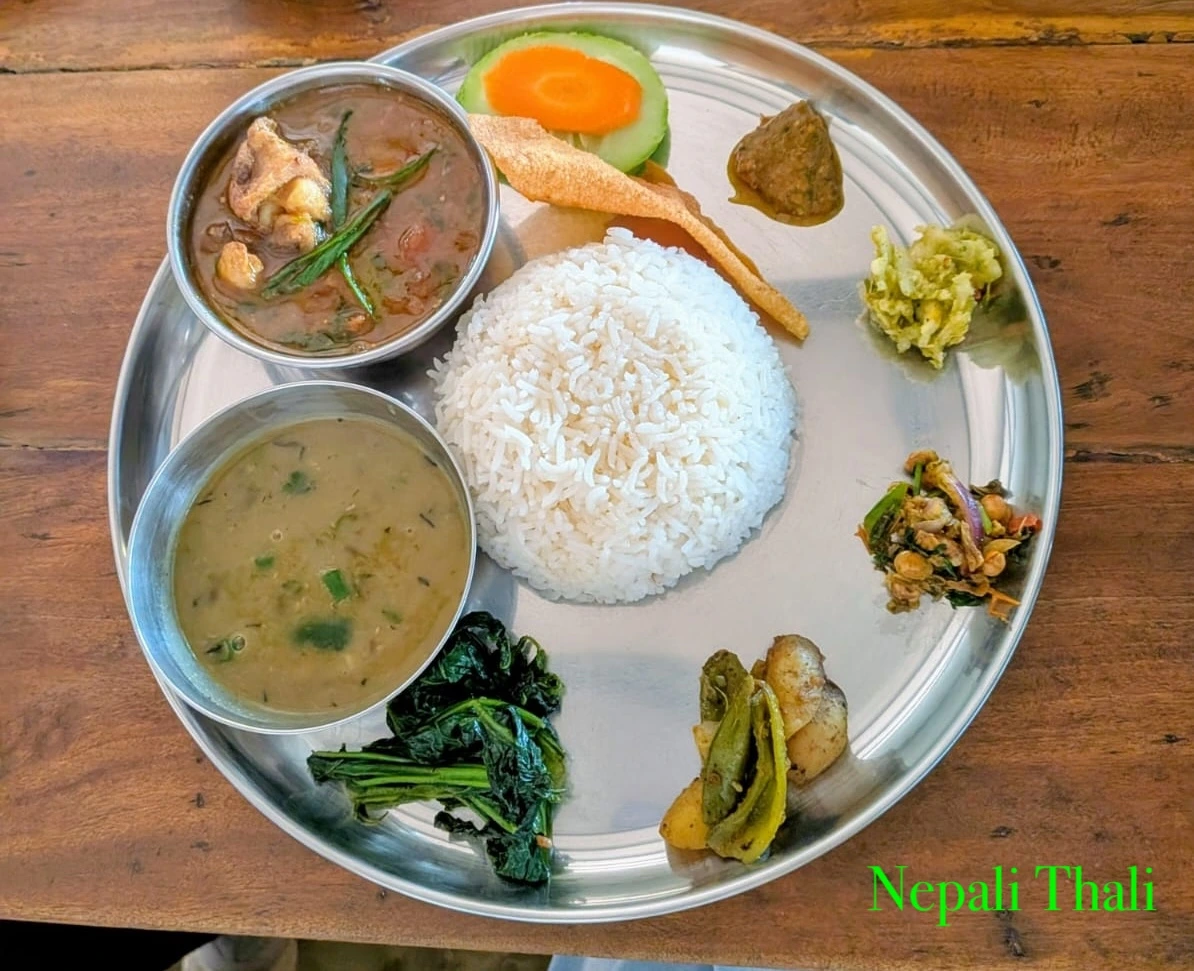
vegetables and fruit
grains
protein
The Nepali plate: just look at it
No need to count grams or calories. Look at your plate.
- Half: saag, pumpkin, carrot, cauliflower, beans, tomato, cucumber and seasonal fruit.
- A quarter: rice, roti, dhindo, chiura or potato. Red or unpolished rice and wheat roti where you can.
- A quarter: dal, beans, egg, fish, chicken, curd or paneer.
Flip the rule. Eat whatever you can, as much as you can, often. Eating enough matters more than a perfect plate.
What is good to eat
All of this is available at home and cheap.
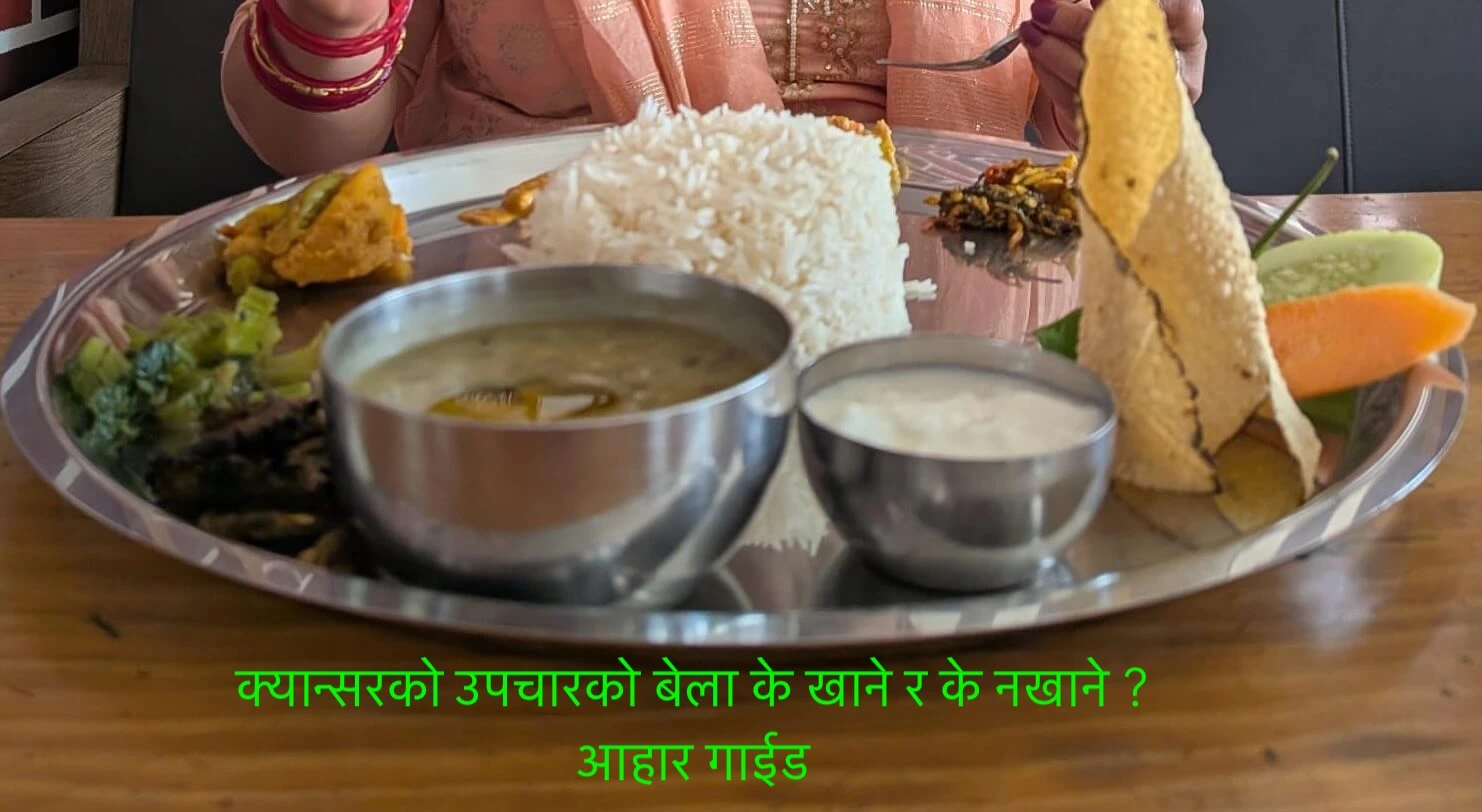
Dal and beans
Nepal's cheapest and best protein. Dal, mas, chana, rajma, soybean, kwati, peas. Have a protein food 2 to 3 times a day.
If you are vegetarian, dal, beans, curd and paneer give enough protein. Vary what you choose.
Eggs, fish and chicken
Eggs are cheap, complete protein. Boiled or well fried, never half-cooked.
Fish about twice a week: well cooked. Chicken can be roasted; boiled or cooked like a curry with less spices.
Milk, yoghurt, curd and paneer
2 to 3 times a day. Boil milk well. If you are losing weight, full-cream milk is better.
Curd set from boiled milk, or packet pasteurised curd, is fine.
Vegetables and fruit
About 5 handfuls a day. Seasonal and local is cheapest and freshest: saag, pumpkin, carrot, cauliflower, beans, tomato, banana, orange, guava, papaya, apple.
Wash everything well.
Rice, roti, dhindo and jaulo
Red or unpolished rice and wheat roti have more fibre, which helps with constipation from chemotherapy.
But when you do not feel like eating, white rice is fine. Eating comes first.
Be careful with these
You do not need to stop most foods during treatment. But avoid these, or ask your doctor first.
Tobacco, khaini, gutka, supari and alcohol
These can make cancer worse and treatment less effective. If quitting is hard, tell your doctor. There is help.
Herbal and ayurvedic medicine, supplements
Some can reduce the effect of chemotherapy or harm the liver. Ask your doctor before taking them. Turmeric, ginger and garlic in cooking are fine.
Unboiled water and raw milk
Boil water and let it cool. Boil milk well.
Raw or undercooked meat, fish and eggs
Everything must be fully cooked. Avoid dried or half-cooked fish too.
Stale food, roadside food, cut fruit left out
When white blood cells are low, infections come quickly. Freshly cooked hot food is safest.
When eating is hard
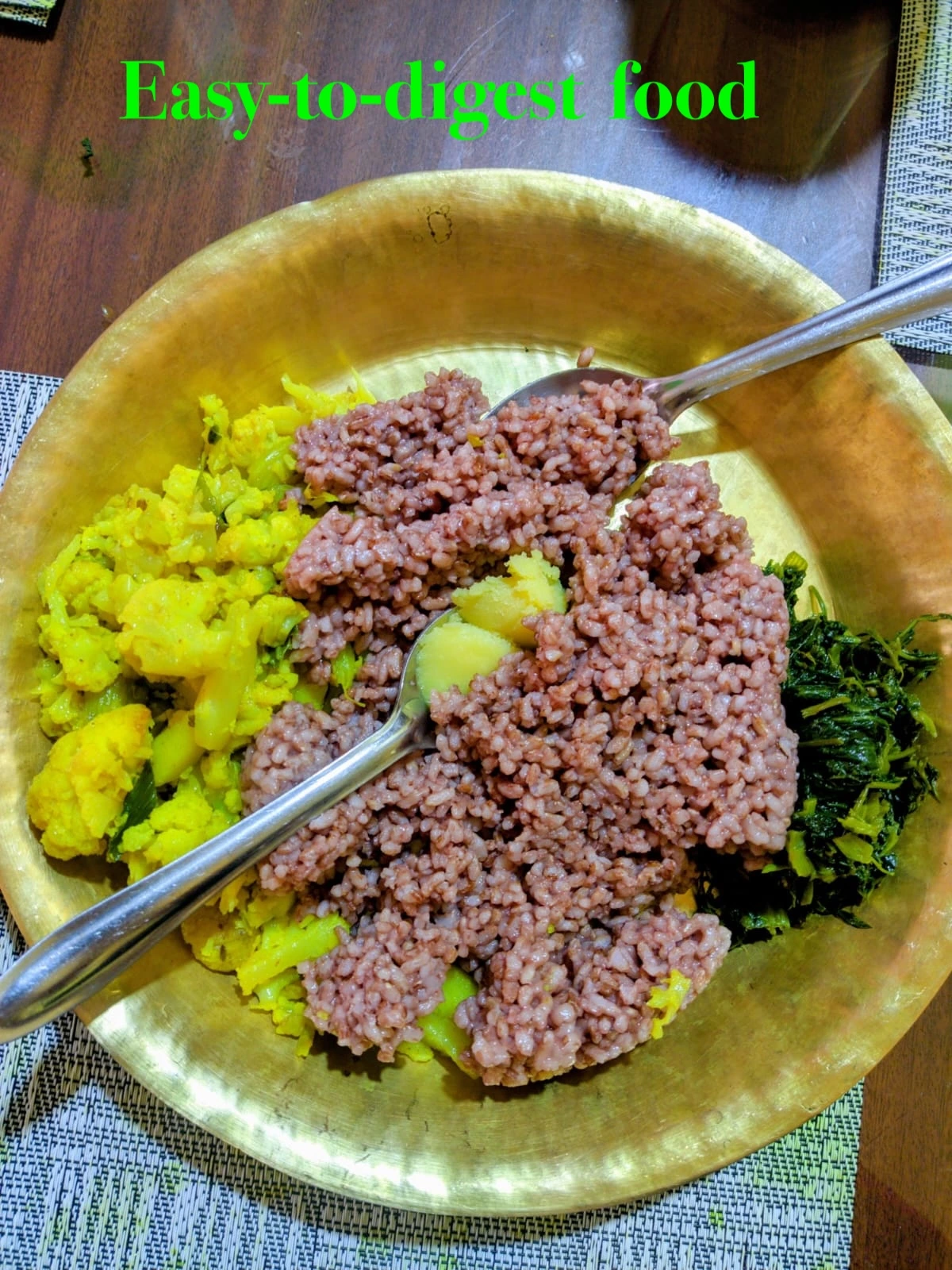
Trouble eating during treatment is common, and there are simple things that help. If it lasts more than a few days, do not just put up with it. Tell your team. Weight loss can be stopped.
| Problem | What helps |
|---|---|
| Nausea or vomiting | Small amounts, often. Cold or room-temperature food if hot food smells bad. Ginger tea, chiura, dry roti or plain biscuits. Take anti-vomit medicine on time if your team has given it. |
| Mouth sores | Soft food: khichdi, jaulo, dal, curd, mashed potato, honey, ghee or butter. Avoid sour, spicy, salty and very hot food. Rinse with baking soda and salt water. Cold food can soothe. |
| Difficulty swallowing | Liquid or mashed food: jaulo, dal soup, milk. Do not eat too much at once. If you cough or struggle to breathe when swallowing, tell your team straight away. Sometimes a thin feeding tube tube through the nose is needed. It is usually temporary and protects your strength. |
| Taste has changed | If meat tastes metallic, eat egg, dal, curd or fish instead. If you have no mouth sores, lemon, timur, ginger and coriander can bring taste back. |
| No appetite | Eat a little every 2 to 3 hours. Have your best meal when you feel hungriest, often in the morning. Drink between meals rather than during. If rice is hard, try khichdi, jaulo, milk or eggs. |
| Constipation | More water, green vegetables, fruit and dal. Walk a little. Ask your doctor about medicine; do not buy it yourself. |
| Diarrhoea | Sip ORS (Jeevan Jal) or salt-and-sugar water often. Eat rice, banana, khichdi, curd. Avoid fried and spicy food. Tell your doctor/dietician if it lasts more than 2 days or happens many times a day. |
If you are being treated at KCC, do not wait. Call today: 01-5091629
Food safety when immunity is low
After chemotherapy your white blood cells drop for a few days. Food can then cause infection. So:
- Wash hands with soap before cooking and eating.
- Eat freshly cooked hot food. Do not keep leftovers until the next day. If you have a fridge, store within 2 hours and reheat well.
- Wash fruit and vegetables well.
- Drink boiled water that has cooled.
- Avoid achar and raw salad. Eat gundruk and sinki only when well cooked.
If you are on chemotherapy and have a temperature of 100 °F (38 °C) or more, or shaking chills, call KCC straight away: 01-5091629 (Tathali).
If you cannot get through, or it is night, go to the nearest emergency department and tell them you are on chemotherapy.
Myths and facts
Family and neighbours suggest many things. These are the ones we hear most.
| What people say | The facts |
|---|---|
| Sugar makes cancer grow. | All body cells, healthy ones too, run on glucose. Cutting out all sugar does not stop cancer. But sweet drinks(coke,packed juice), sweets and biscuits crowd out foods that give strength, so cutting down is sensible. |
| Eggs, meat and fish spread cancer. | This is wrong. They are good protein and give strength during treatment. Eat less red meat (goat, buffalo, pork) and processed packet meats like sausage and ham. |
| Milk makes cancer grow. | There is no such proof. Milk and curd are easy sources of protein and calcium. If milk upsets your stomach, choose curd or smaller amounts. |
| Fasting kills cancer or cleanses the body. | During treatment, long fasts reduce strength and make treatment harder. If you want to fast for religious reasons, talk to your team first. A way that includes milk and fruit can often be found. |
| Cold, sour or "hot" food makes cancer worse. | There is no scientific proof. Eat what is easy to digest and what you enjoy. But with mouth sores, sour and spicy food stings, so avoid it then. |
| This leaf, root or herb cures cancer completely. | There is no proof any food or herb cures cancer alone. Be careful with anyone who promises a complete cure, and do not stop treatment. Some herbs can cause harm. |
| You need expensive superfoods and "cancer diet" packets. | You do not. Home dal, rice, vegetables, eggs and milk are best. |
If someone presses a remedy on you, say "I will ask my doctor first." You do not have to argue.
A sample day
Simple and made at home. It is only a sample. How much you need depends on your illness, treatment and weight.
| When | What to eat |
|---|---|
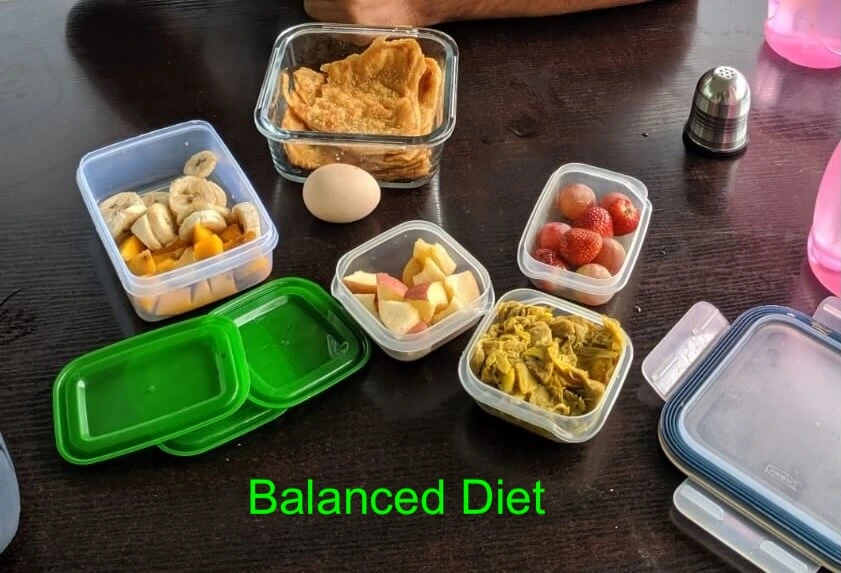
| Morning | 1 bowl corn flakes, jaulo ,Quinoa,peanut, chana satu or oats, 1 glass milk and 1 banana |
| Lunch | Rice, dal, saag or vegetables, and curd |
| 2 pm | Fruit and chiura |
| Dinner | 3 rotis, dal, vegetables and 1 boiled egg (or fish, chicken) |
| Before bed | 1 glass warm milk |
- 1 teaspoon of oil or ghee to dal or vegetables.
- Make khichdi or jaulo with milk, and add milk powder.
- Eat up to 6 times a day, in small amounts.
- One extra egg.
If you have diabetes, kidney or heart disease, your diet needs adjusting. Tell your medical team so they can fit it to you.
After treatment, and for the family
Once treatment is over, or if cancer worries you in the family, this pattern is good. It does not apply if you are losing weight during treatment.
- Salt: less than 1 teaspoon (about 5 g) a day, counting salt in cooking, achar and packet snacks.
- Less achar, and less heavily salted or smoked fish and meat.
- Goat, buffalo and pork only a few times a week. Less sausage and ham.
- Less sweet drinks, sweets and biscuits.
- Vegetables, fruit, dal and whole grains every day.
- Keep a healthy weight and walk regularly.
- No tobacco and no alcohol.
You do not have to change everything at once. Take it one step at a time.
Eating well on a small budget
The best food is often the cheapest: dal, eggs, seasonal vegetables, local fruit (banana, guava, orange), milk and curd, roasted chana and peanuts, wheat and dhindo.
You do not need expensive imported fruit, "superfoods" or "cancer diet" packets. Plan the week before you buy, buy dal and rice in bulk, and cook at home.
If money is stopping you from eating enough, tell your team. We can look for a way together.
When to talk to your medical team
Tell us early if any of these happen:
- You have lost more than 2 kg in 2 weeks without trying.
- You could not eat or drink normally for more than 2 days.
- You vomited twice in a day or more .
- Diarrhoea has lasted more than 2 days.
- Mouth sores or trouble swallowing make eating hard.
- You are about to start a diet, supplement, herb or fast.
If you are being treated at KCC, call your team. Tathali: 01-5091629 · New Baneshwor City Clinic: 01-5312123
Common questions
What should I eat during cancer treatment?
Eat everyday home food regularly: dal-bhat , beans, eggs, fish, chicken, milk, curd, vegetables, fruit, and rice or roti. During treatment the first goal is to eat enough and not lose weight. You do not need expensive or special foods.
What should I avoid during cancer treatment?
Avoid tobacco, khaini, gutka, supari and alcohol. Do not take unboiled water or raw milk, raw or undercooked meat, fish or eggs, or stale and roadside food. Ask your doctor before taking herbal or ayurvedic medicine or supplements. Most ordinary foods do not need to be stopped.
Does sugar make cancer grow?
There is no proof that sugar alone makes cancer grow, or that cutting sugar stops it. All cells in the body use glucose. But sweet drinks, sweets and biscuits take the place of balanced healthy foods that give overall nutrition to body, so eat less when you can.
What can I eat when chemotherapy makes me feel sick?
Eat small amount of food often. Cold or room-temperature food, ginger tea, chiura, dry roti or plain biscuits are easier. Avoid hot, fried or strong-smelling food. If your doctors has given anti-vomiting medicine, take it on time.
Can I eat eggs, meat and fish during cancer treatment?
Yes. They are good sources of protein and give strength during treatment. Cook them well. Do not eat too much red meat (goat, buffalo, pork) or processed packet meats like sausage and ham.
Can any herb or food cure cancer?
There is no proof that any food or herb cures cancer on its own. Some can reduce the effect of chemotherapy or harm the liver. Be careful with anyone who promises a complete cure, and do not stop treatment.
Can I fast during treatment?
Long fasts reduce strength and make treatment harder to tolerate. If you want to fast for religious reasons, talk to your team first. Ways can often be found that include milk and fruit so you do not lose weight.
What should I do if I get a fever during chemotherapy?
A temperature of 100 °F (38 °C) or more during chemotherapy should not wait. Contact the hospital immediately.